


City Hall and Park
Various artists. Collection of 6 photographs of New York City buildings
New York, 1894-1903
6 albumen and gelatin silver prints, various sizes (6 ½ x 8 ⅜ in. – 10 ¾ x 13 ⅝ in.). Very good condition over all.
This collection of six early photographs shows New York’s iconic City Hall, City Hall Park, and environs.
New York’s City Hall was completed in 1812 to designs by Joseph François Mangin and John McComb Jr., who won the 1802 competition and divided a $350 prize. The building combines French Renaissance and English neoclassical elements in a central pavilion flanked by projecting wings, all faced in Massachusetts marble except the rear, which was executed in brownstone as a cost-saving measure and oriented away from the expected southern approach. As the city expanded northward, that expedient became increasingly conspicuous, and the rear was eventually reclad in Alabama limestone in the mid-1950s.
The collection includes:
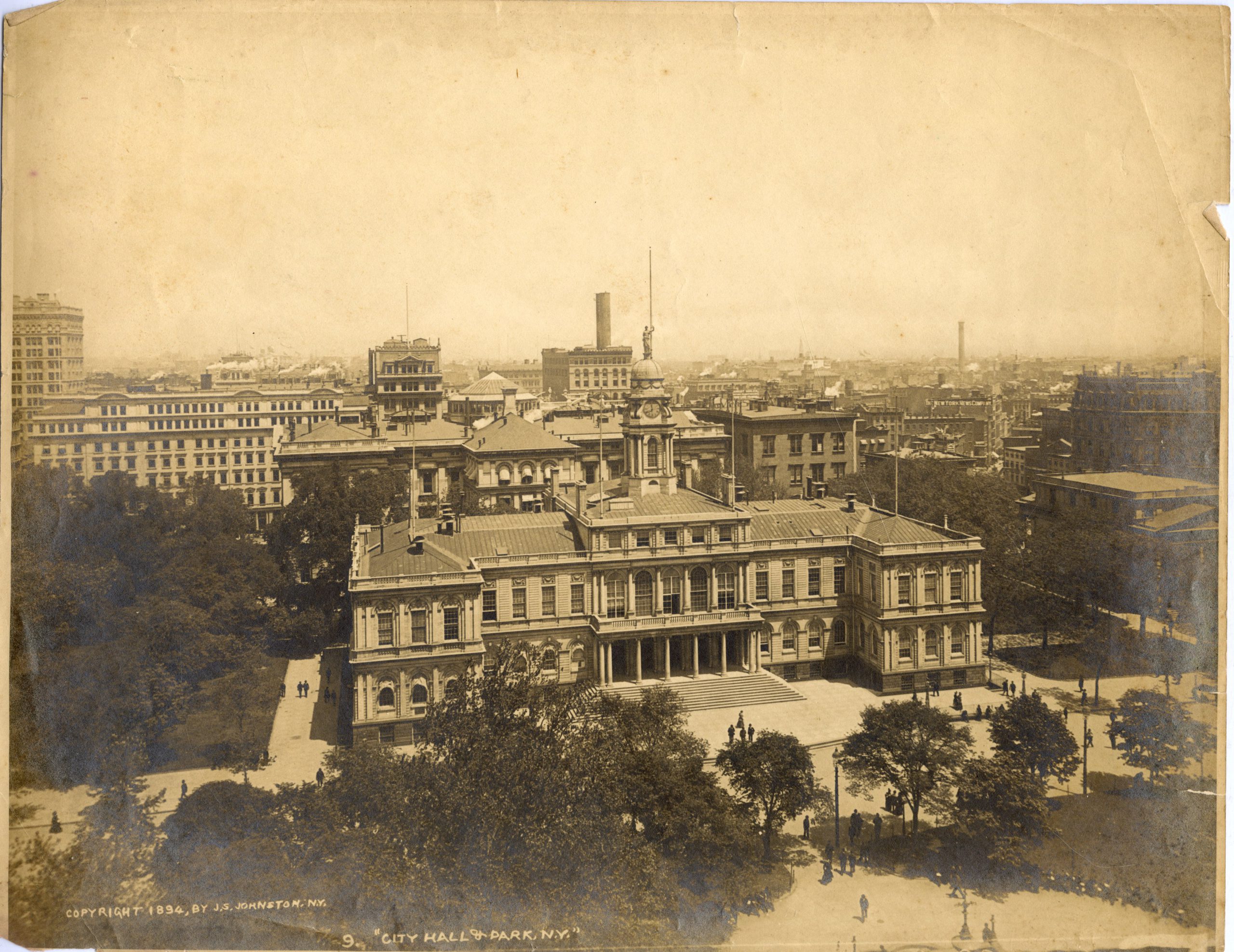
John S. Johnston. City Hall and Park, N.Y., 1894.
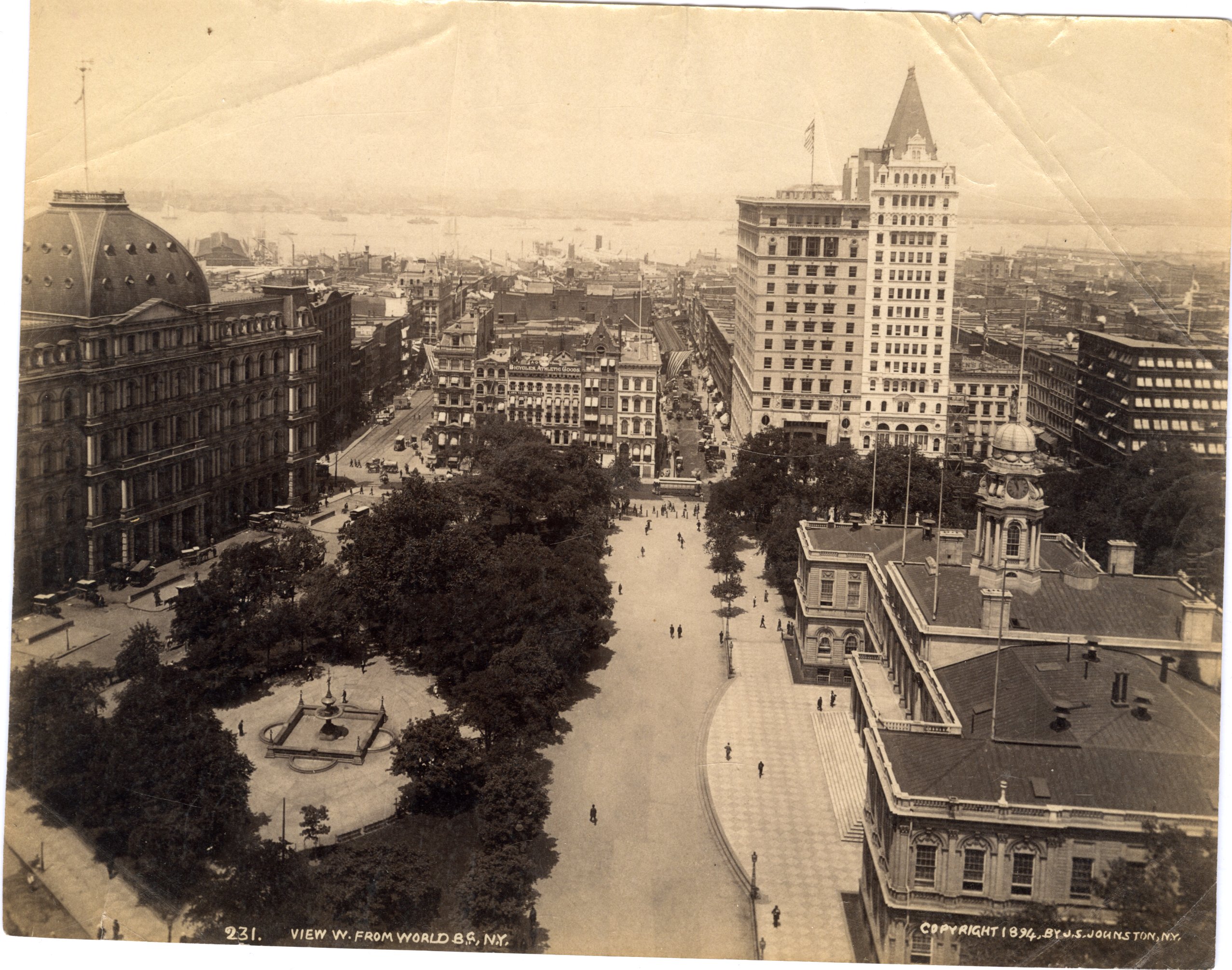
John S. Johnston. View West from the World Building, N.Y., 1894.
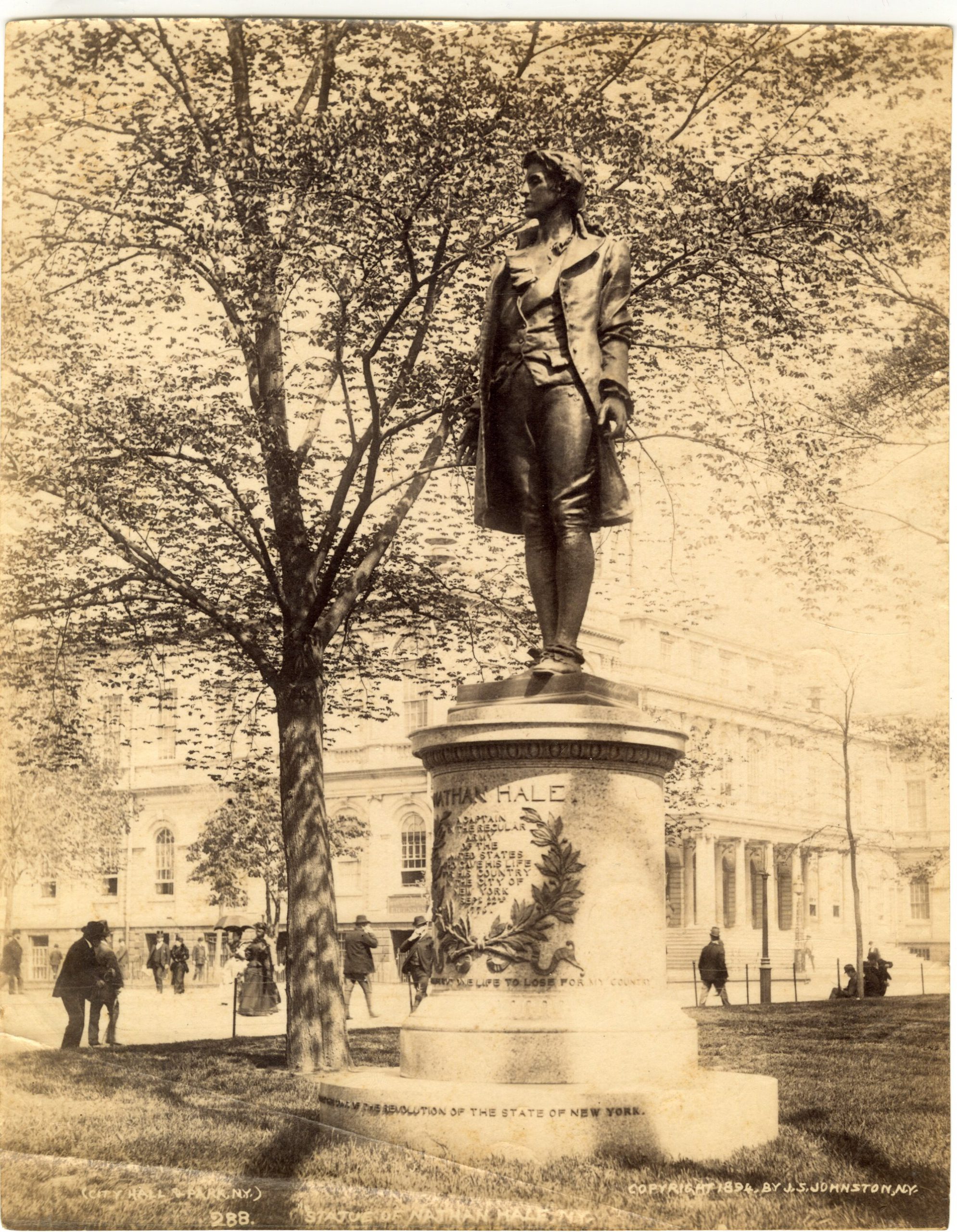
John S. Johnston. Statue of Nathan Hale, City Hall Park, N.Y., 1894.
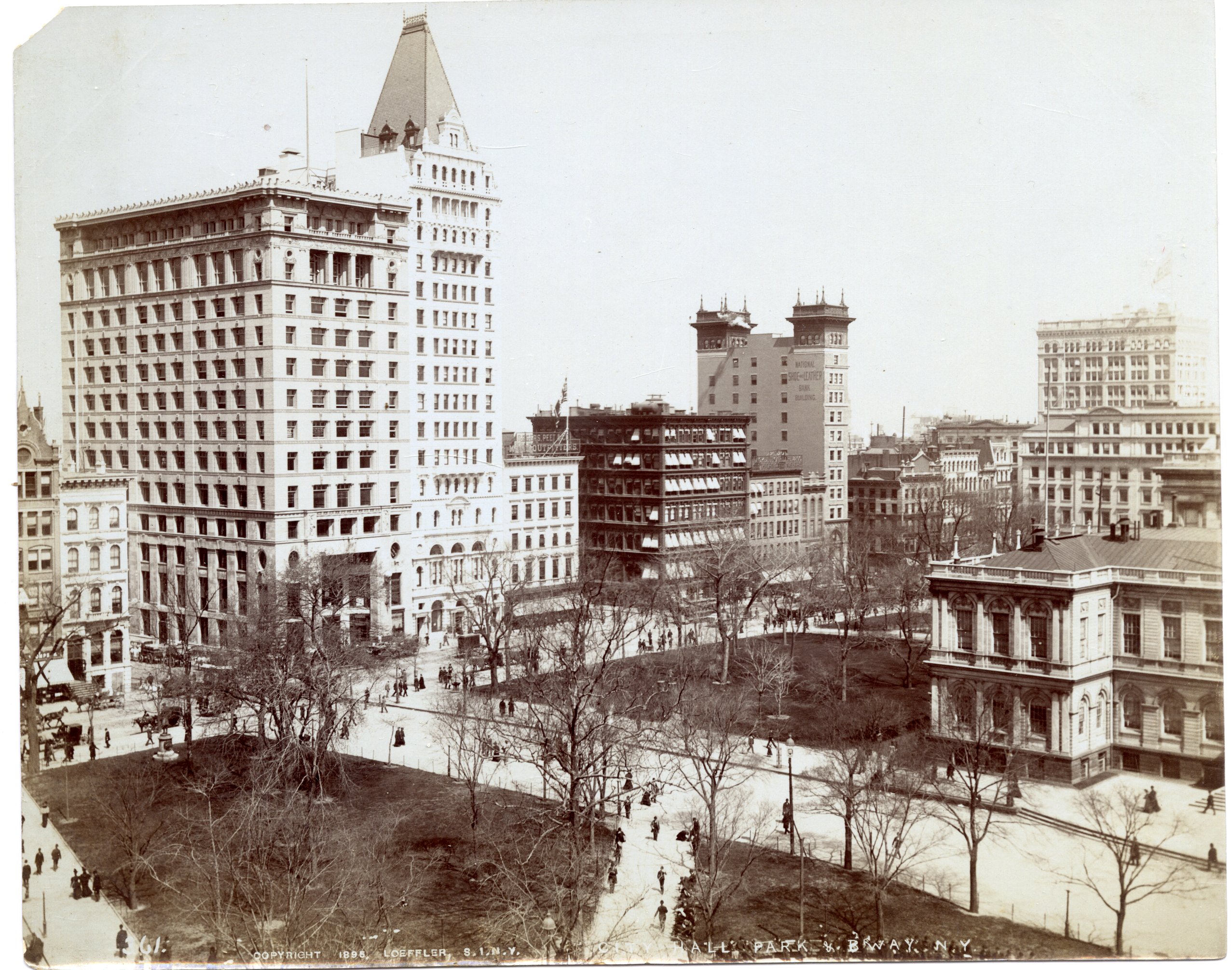
Loeffler. City Hall, Park and Broadway, N.Y., 1896.
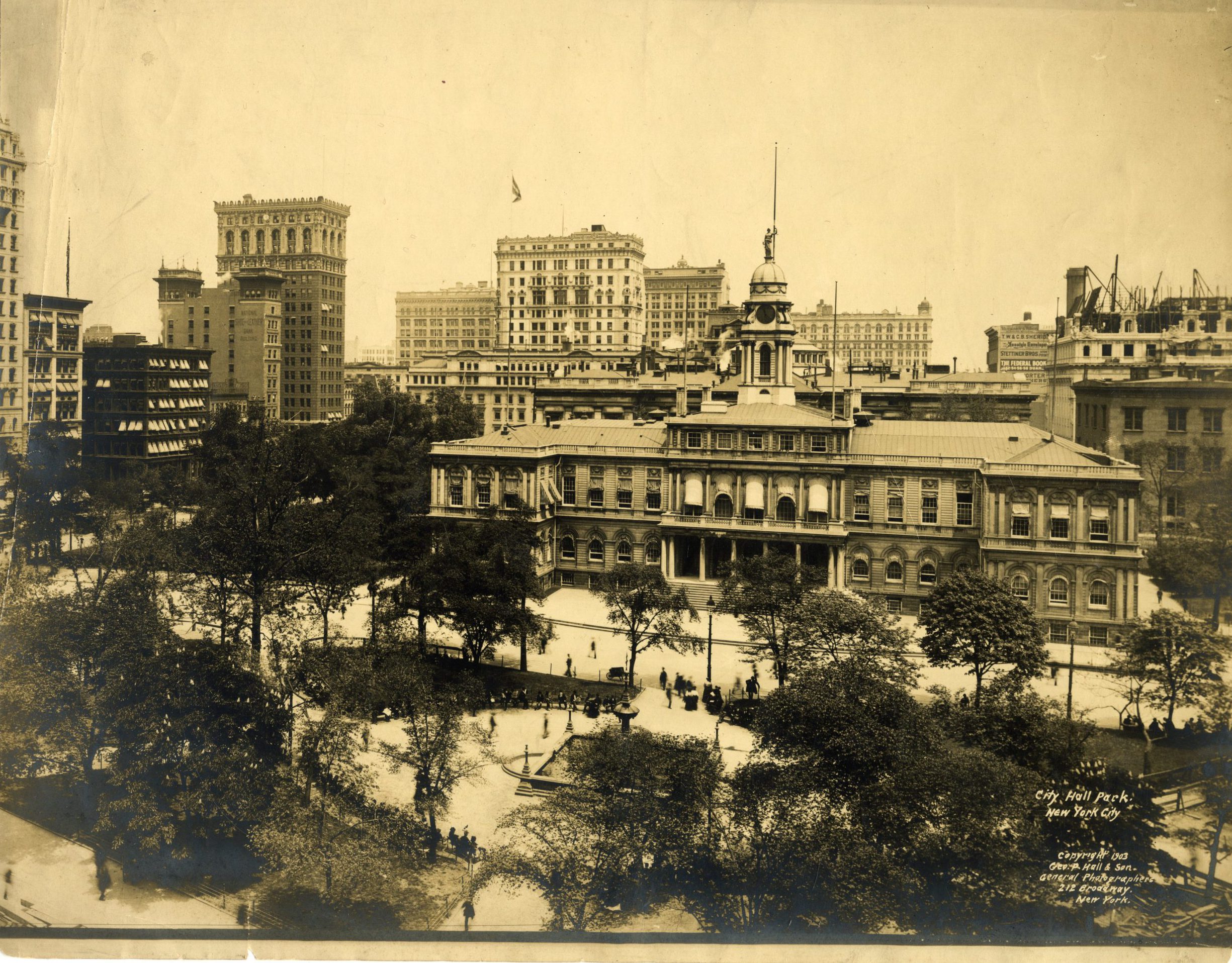
George P. Hall & Son. City Hall Park, New York City, 1903.
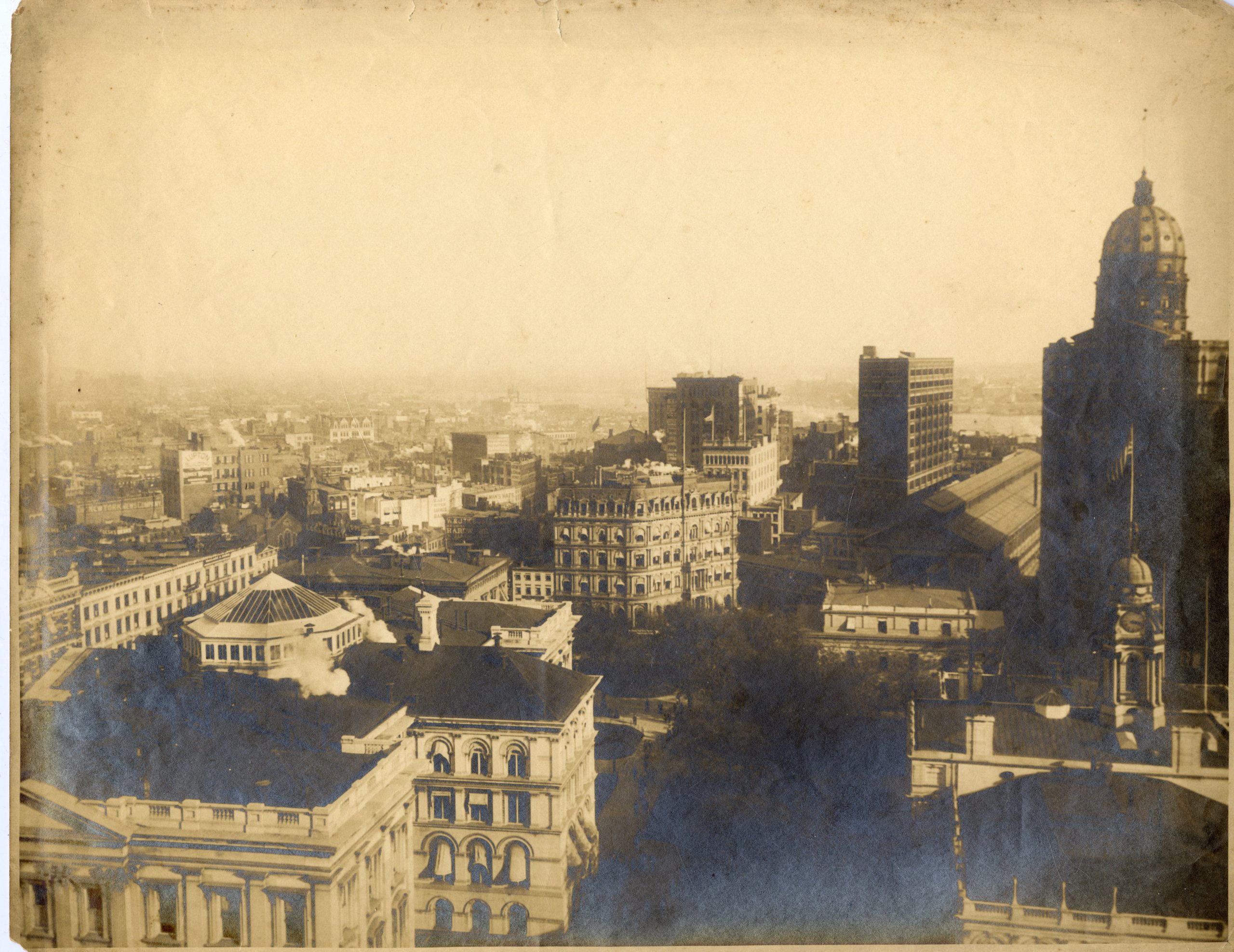
Unidentified photographer. View north over City Hall and Park, c. 1894-1900.
Johnston’s 1894 view from the northeast records this earlier condition, while his aerial view west from the World Building (no. 231) takes in the full sweep of City Hall Park, with the Hudson and New Jersey faintly visible beyond. A sixth, unattributed photograph looks north over the rooftops from a vantage south of the park, with City Hall at left, the dome of the World Building at far right, and a cluster of late nineteenth-century office buildings rising at center.
The statue of Nathan Hale, photographed here within months of its unveiling, is the work of Frederick MacMonnies and was dedicated on November 25, 1893, by the Sons of the Revolution on Evacuation Day. Since no portrait of Hale from life survives, MacMonnies supplied one: a young man with bound hands, poised before execution.
By the time of the Hall & Son photograph of 1903, taller office buildings had begun to punctuate the skyline behind City Hall, though the building continues to register as a discrete civic core within the thickening commercial skyline. It remains the oldest city hall in continuous governmental use in the United States.
A full description and inventory are available on request.
$5,000