


New York City bridges
JOHNSTON, JOHN S. Collection of 7 photographs of New York City bridges
New York, 1893-1894
7 albumen prints, various sizes (6 ½ x 8 ¼ in. – 10 x 13 in.). Very good condition over all.
This collection of seven photographs show three iconic New York bridges and their environs.
John S. Johnston (c. 1839-1899) was a New York–based maritime and cityscape photographer whose late-nineteenth-century images (especially of yachts, harbors, and civic landmarks) circulated widely in print. The photographs gathered here bring those two domains together: bridges serve as both infrastructure and spectacle, linking the working waterfront to the expanding city. Johnston returned repeatedly to the crossings of upper Manhattan, working the Harlem and East Rivers from elevated perches, riverbanks, and adjoining streets. These seven photographs document three structures that span nearly half a century of engineering ambition: the High Bridge of 1848, the Brooklyn Bridge of 1883, and the Washington Bridge of 1888. This collection includes:
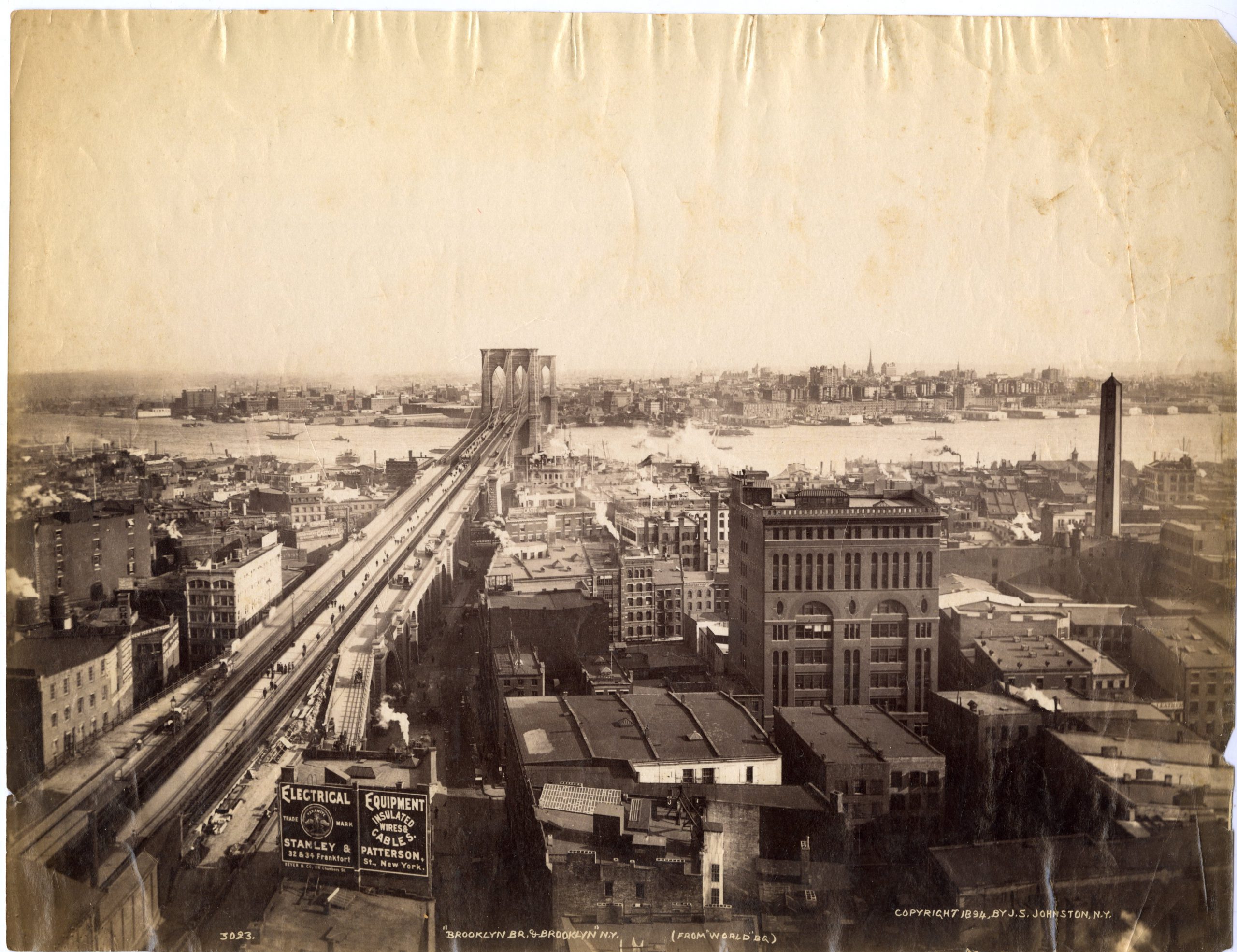
John S. Johnston.Brooklyn Bridge and Brooklyn, N.Y. from the World Building, 1894.
Looking east from the World Building toward Brooklyn, then still an independent city (consolidated with New York in 1898). Cable cars run along the inner tracks, a service in operation since September 1883. Designed by John A. Roebling and completed under the direction of his son Washington after the elder Roebling’s death in 1869, the bridge had for more than a decade been the only fixed crossing of the East River.
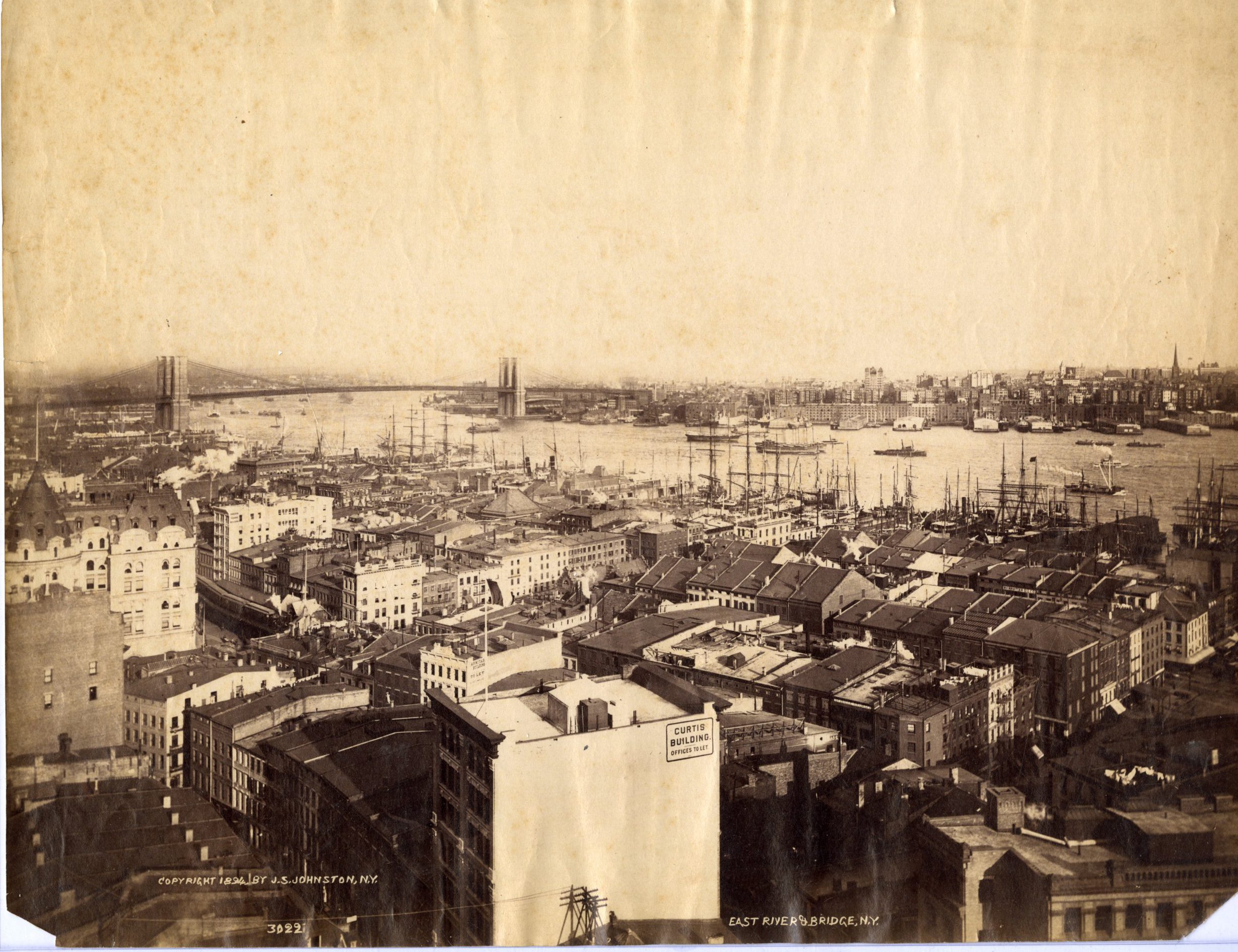
John S. Johnston. East River and Bridge, N.Y., 1894.
A wider view of the same prospect, the camera shifted slightly south so that the bridge recedes toward the upper left. The foreground fills with the working waterfront—sailing vessels, steamships, ferry wakes, and tightly packed piers. A sign reading “Curtis Building, Offices to Let” is legible at center.
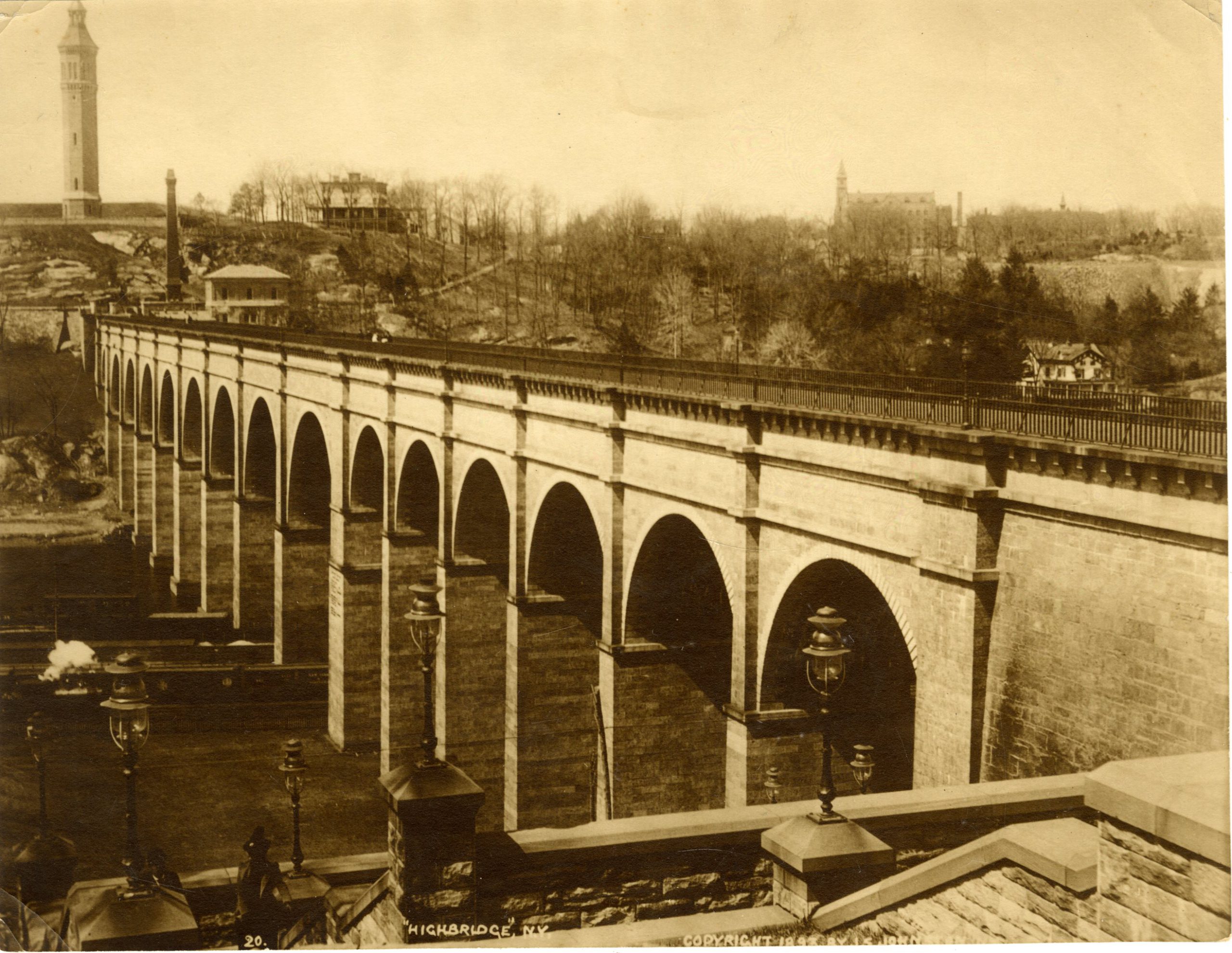
John S. Johnston. High Bridge, N.Y., 1894.
The High Bridge, completed in 1848 to carry the Croton Aqueduct across the Harlem River into Manhattan, was designed by John B. Jervis as a Roman-style arcade of stone piers and arches. Johnston’s photograph renders that lineage palpable as the masonry advances across the frame with the gravity of a classical ruin, ornamental gas lamps lining the roadway in the foreground. The Highbridge Water Tower (1872) rises on the bluff at far left, while a locomotive steams beneath the arches at river level.
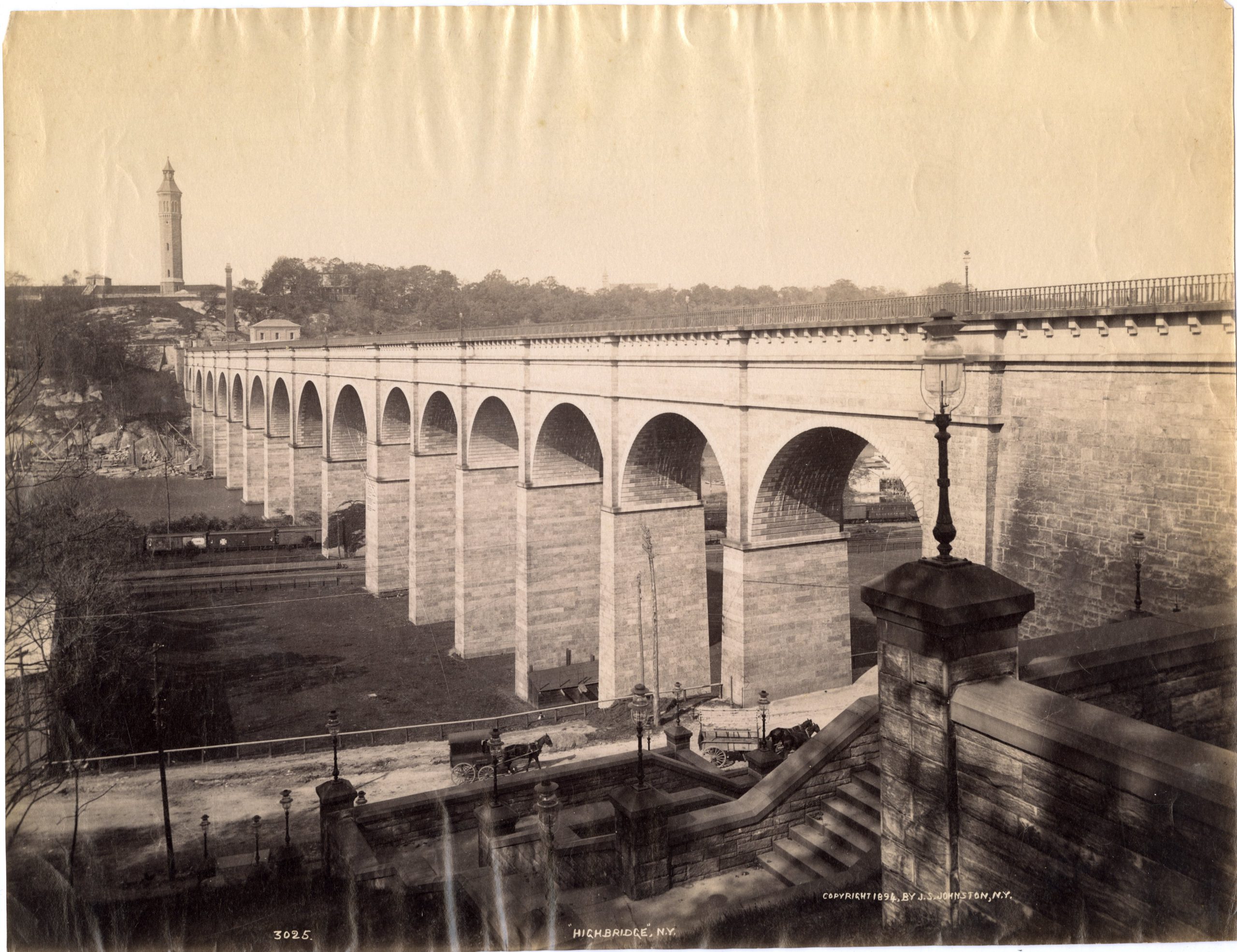
John S. Johnston. High Bridge, N.Y., 1894.
A closely related view taken from a slightly adjusted position a year later, with a horse-drawn wagon visible on the road below and stone steps descending in the right foreground.
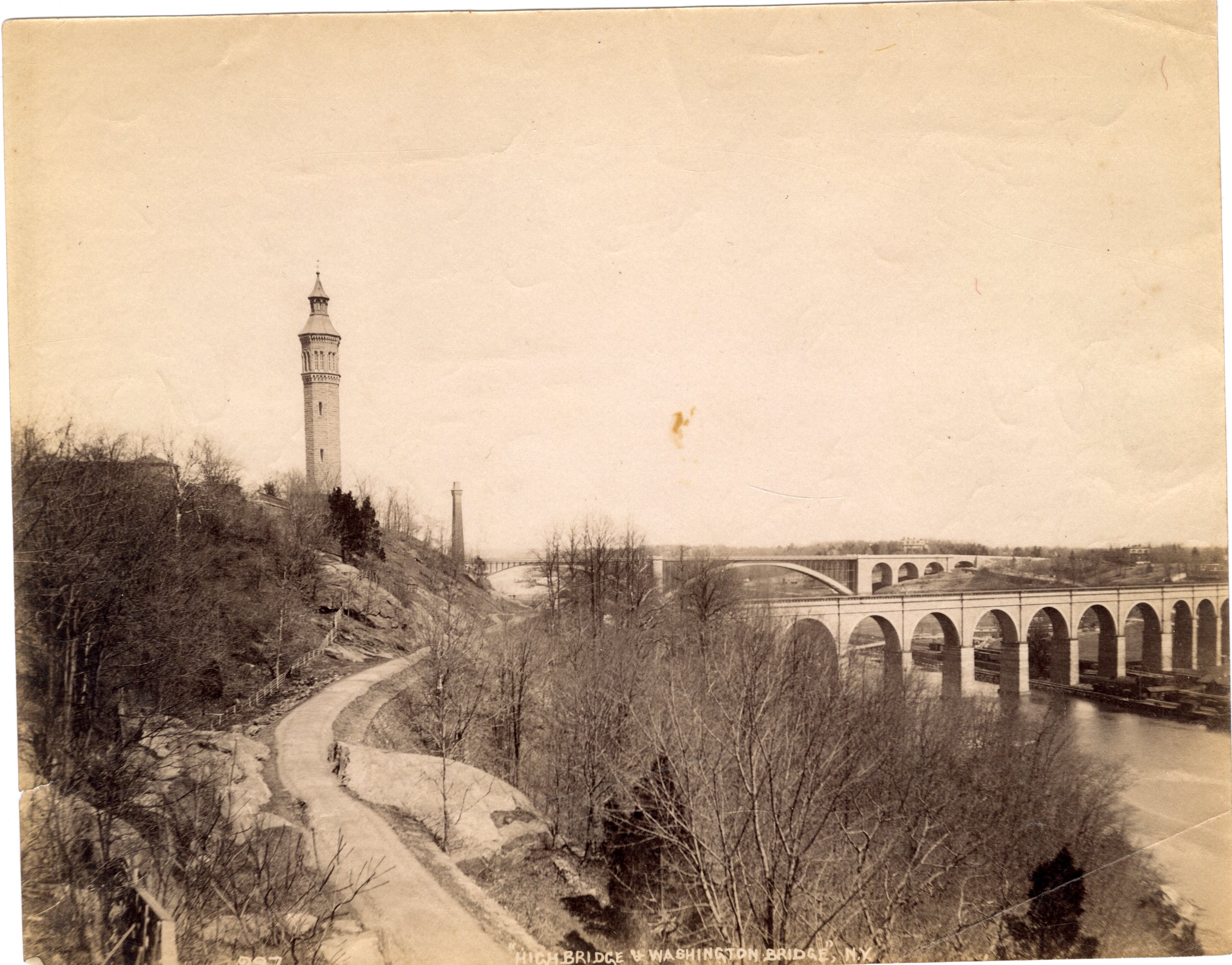
John S. Johnston, attrib. High Bridge and Washington Bridge, N.Y., c. 1894.
A wintry view that brings two bridges into a single frame. The High Bridge crosses the foreground, its arches receding toward the Bronx bank, while the Washington Bridge appears beyond, its steel span compressed by distance. The Highbridge Water Tower dominates the left side of the composition, and a winding path descends the bluff toward the river. The camera is positioned on the Manhattan side, slightly south of the High Bridge, looking north-northeast along the river corridor.
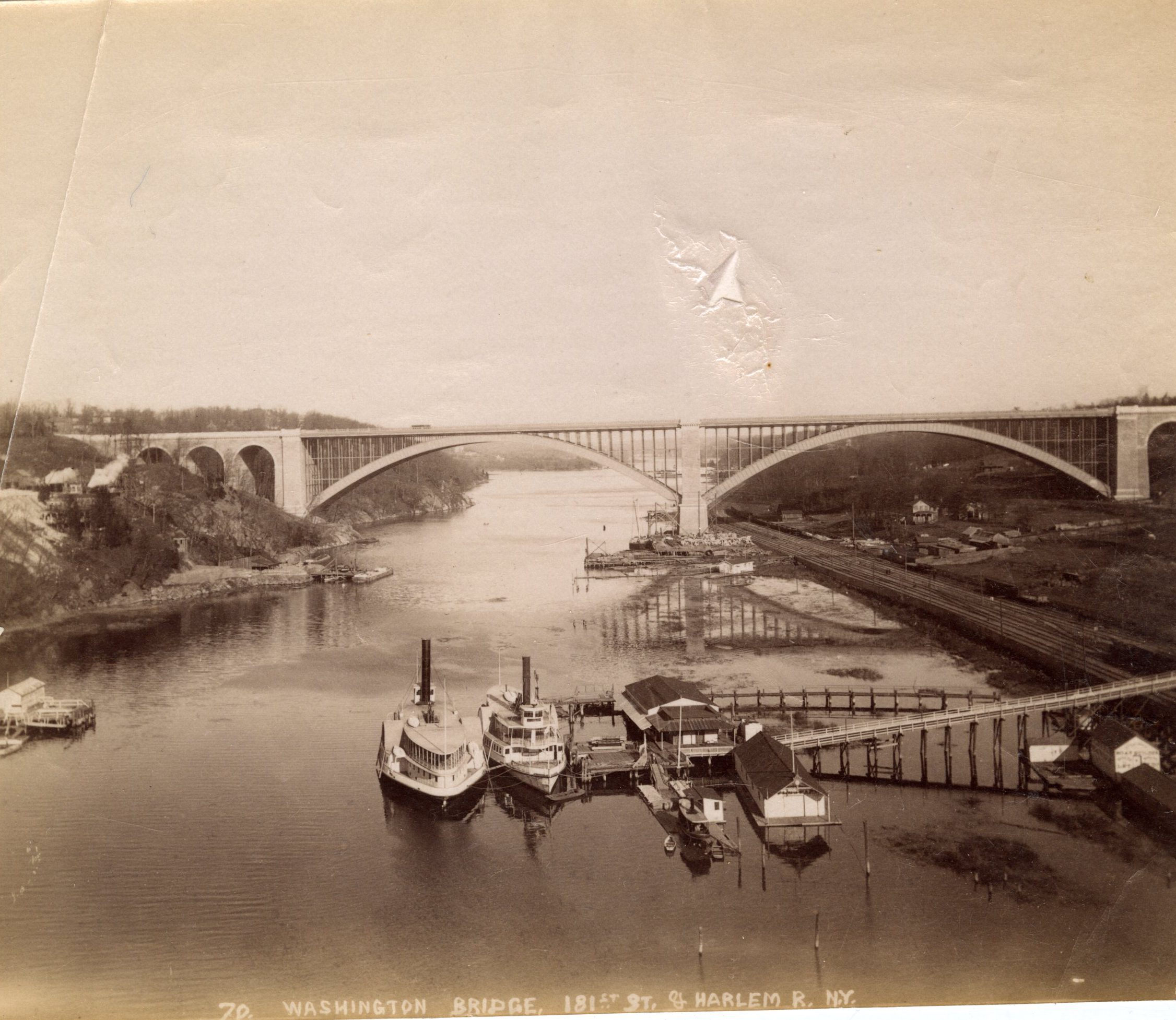
John S. Johnston, attrib.Washington Bridge, 181st St. and Harlem River, N.Y., c. 1893.
The Washington Bridge seen from downstream, its two steel arches spanning the narrow reach of the Harlem River. A steamboat and what appears to be a small ferry lie at a dock in the foreground, while railroad tracks run along the right bank. The surrounding area remains only lightly developed. Opened in 1888 to connect 181st Street in Washington Heights to the Bronx, the bridge was designed by Charles C. Schneider and Wilhelm Hildenbrand and was widely regarded as one of the most accomplished steel arch bridges of its time.
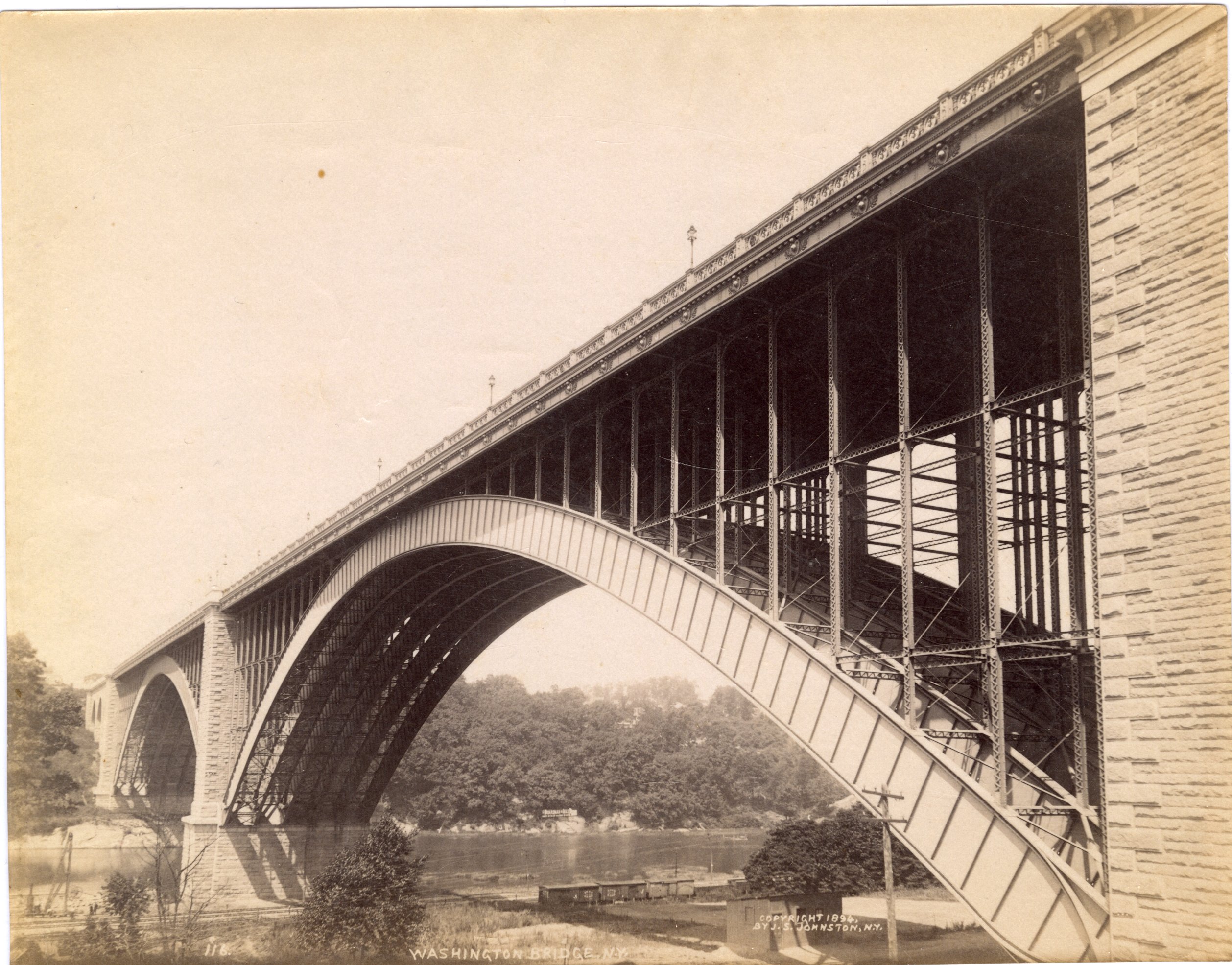
John S. Johnston. Washington Bridge, N.Y., 1894.
Johnston’s close view from below, looking up through the steel lattice of the main arch from the riverbank. The arch rises from its massive stone abutment with a structural clarity that distance views diffuse, while the decorative cornice and lamp posts register along the upper edge. The Harlem River and the wooded Bronx shore appear through the span beyond.
A full description and inventory are available on request.
$12,000