


Up the Hudson
JOHNSTON, JOHN S. Collection of 7 photographs of the Hudson River
New York, 1893
7 albumen prints, various sizes (6 ½ x 8 ¼ in. – 8 x 10 in.). Very good condition over all.
These seven photographs trace the Hudson River from New York Harbor to the Highlands, a journey that in Johnston’s day could be made by steamboat in a long afternoon.
The river in the 1890s was a working corridor, crowded with freight traffic and passenger steamers, its banks lined with railroad tracks, and its crossings, since there was only one bridge south of Albany until 1889, were major engineering events. Johnston, whose professional life was bound up with ships and water, returned to the river repeatedly.
The collection includes:
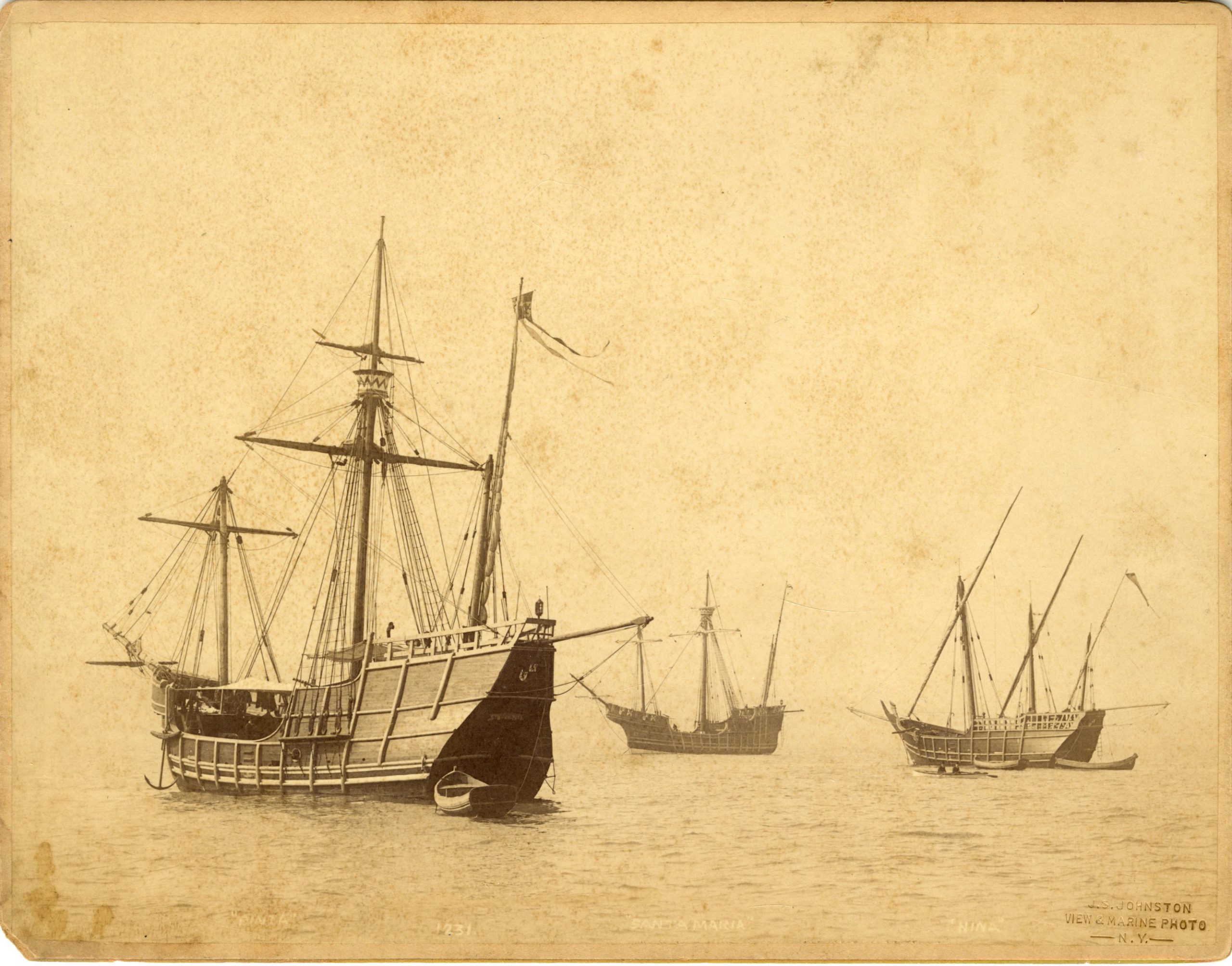
John S. Johnston. Pinta, Santa Maria, Nina, c. 1893.
The Spanish government built replicas of Columbus’s three ships for the quadricentennial of his 1492 voyage and sailed them across the Atlantic to appear at the 1893 World’s Columbian Exposition in Chicago. Johnston photographed them in New York Harbor during their stopover en route. The Santa Maria, the largest, sits at center with her high sterncastle and furled sails; the Pinta and the smaller Nina flank her. Contemporary observers found the vessels surprisingly small. The New York Times called them “dumpy, cumbrous craft.” After the Exposition, the replicas remained in the Great Lakes for two decades before deteriorating beyond repair.
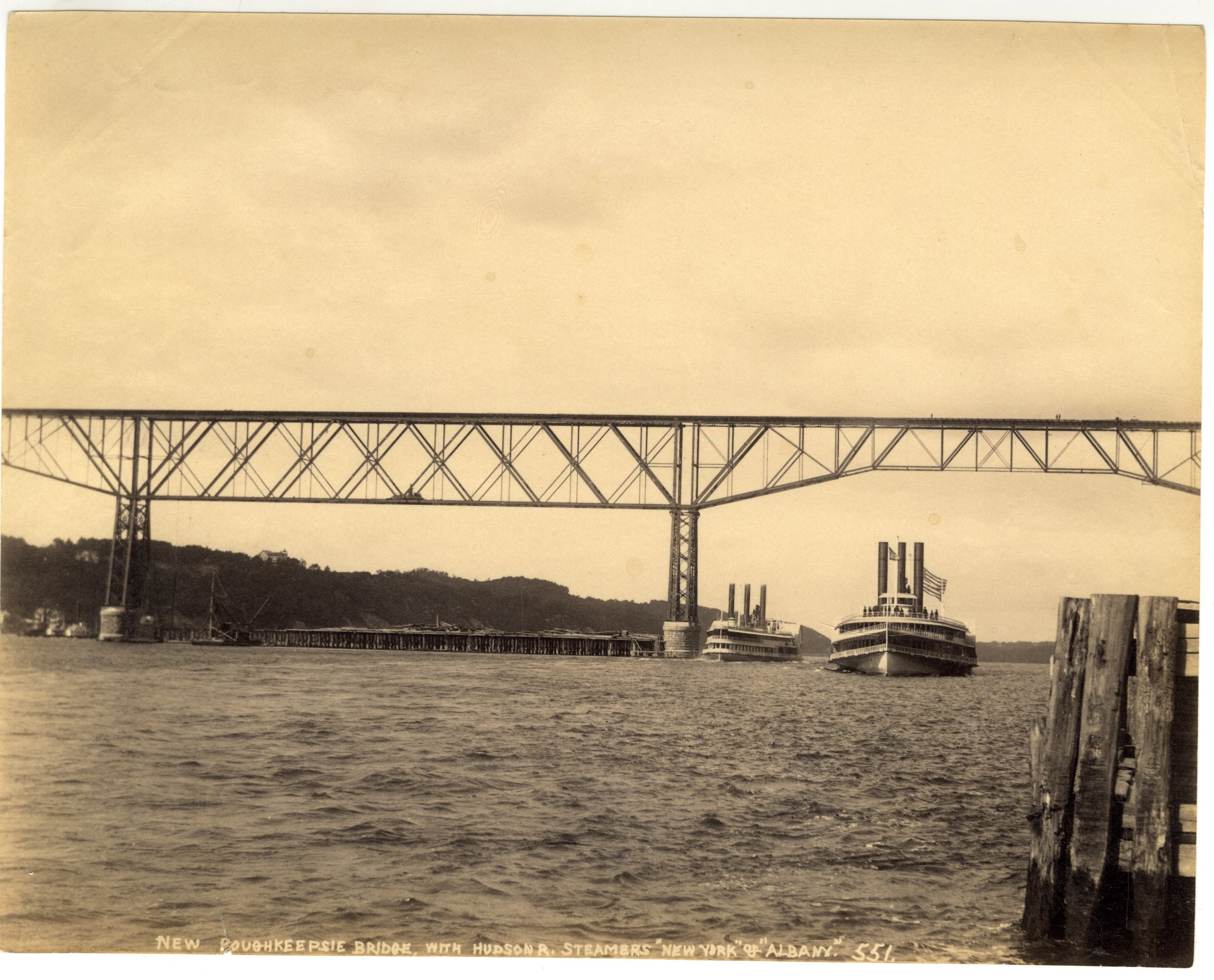
John S. Johnston. New Poughkeepsie Bridge, with Hudson River Steamers “New York” and “Albany,” undated.
The Poughkeepsie Railroad Bridge, completed in January 1889, was the first fixed crossing of the Hudson south of Albany and briefly the longest bridge in the world. Its steel cantilever trusses rise 212 feet above the water. A Hudson River steamer, flying an American flag and crowded with passengers on its upper decks, passes under the span. The bridge carried railroad traffic until a fire damaged it in 1974; it reopened in 2009 as the Walkway Over the Hudson, the longest elevated pedestrian bridge in the world.
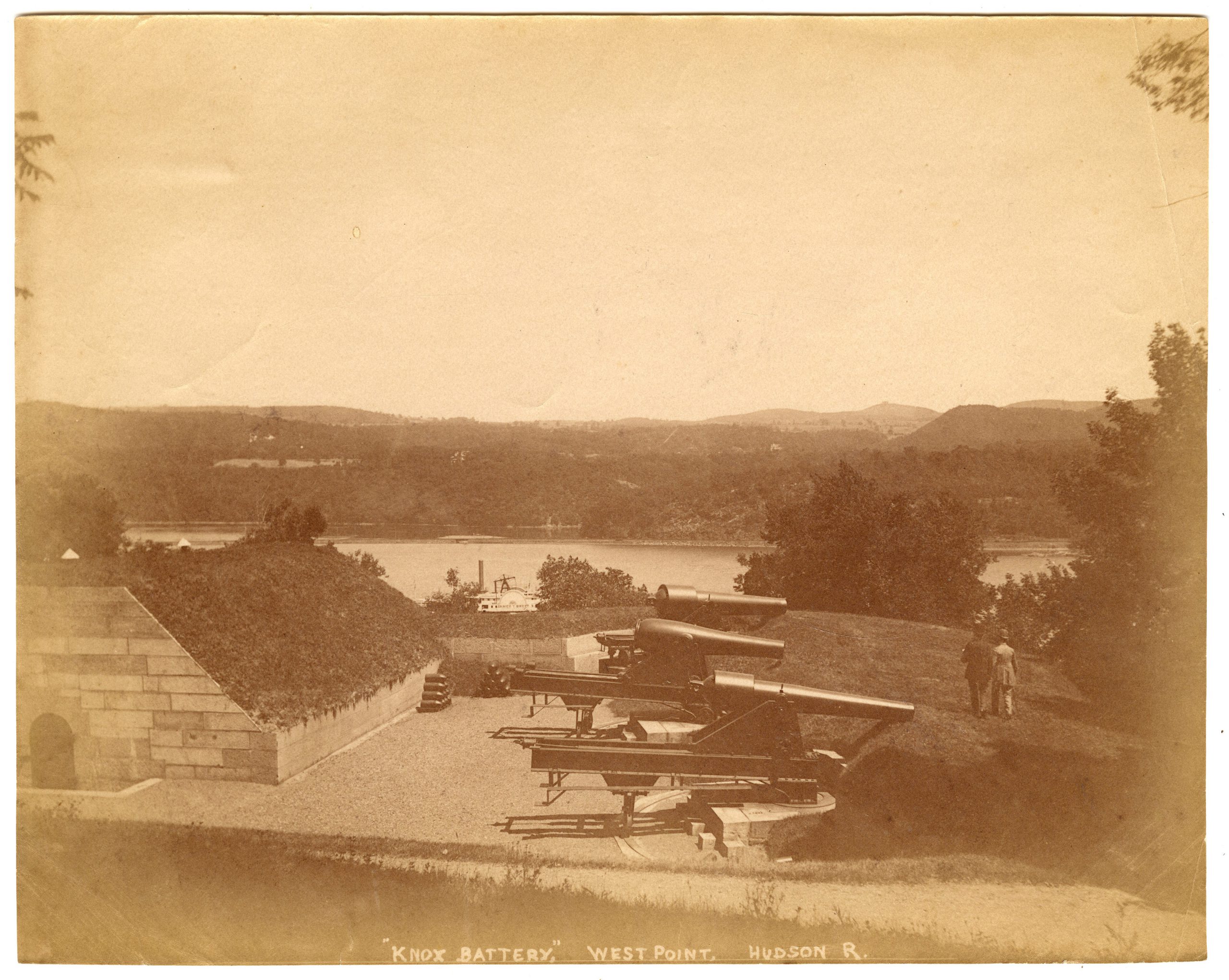
John S. Johnston. “Knox Battery,” West Point, Hudson River, undated.
The battery’s guns, trained over the river, recall the Hudson’s long strategic importance as the corridor that had to be held if the interior and the seaboard were to remain connected. By the late nineteenth century, the immediate military urgency had passed, yet Johnston’s image still presents the landscape as one shaped by preparedness, with the river as route, threshold, and possible line of defense.
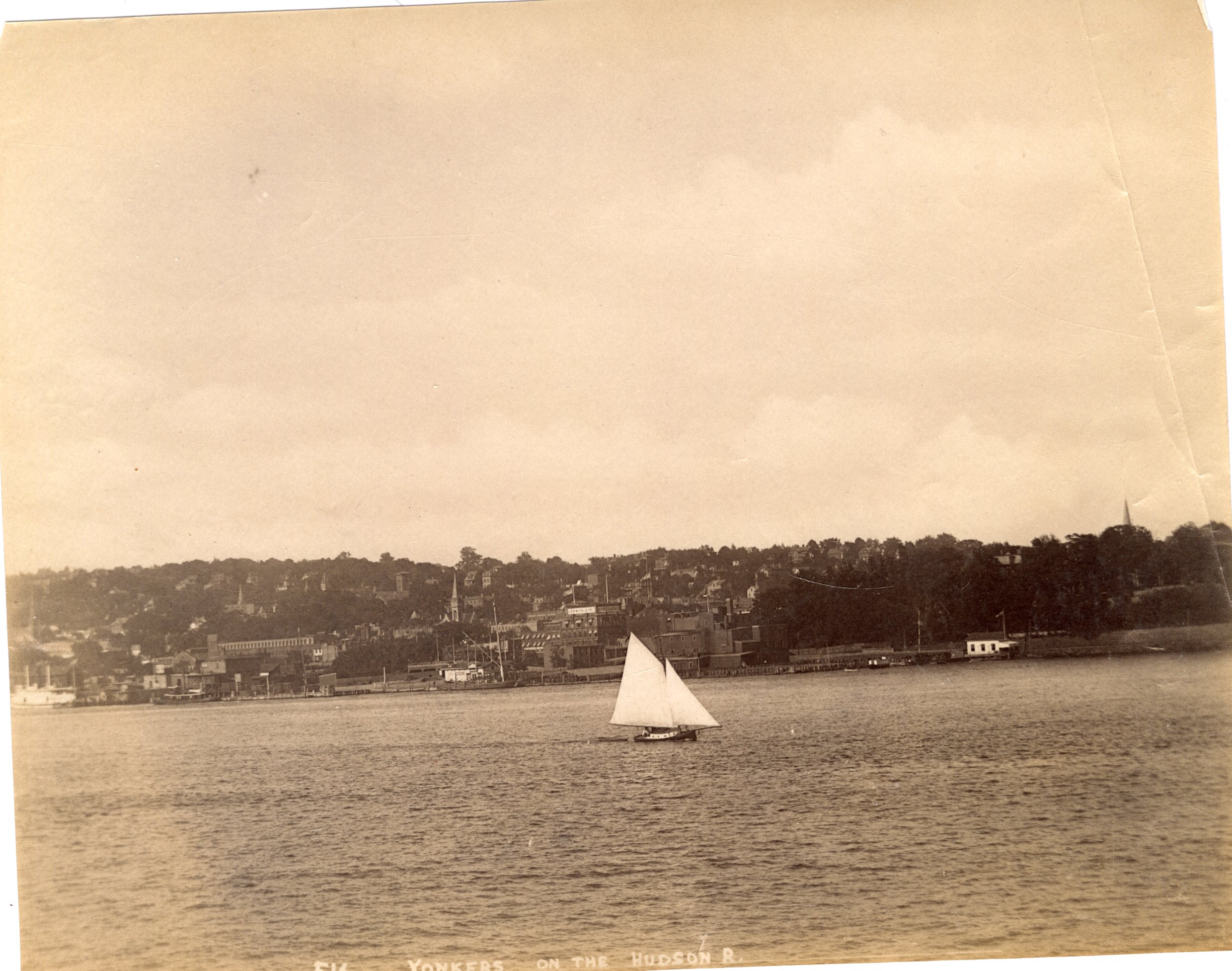
John S. Johnston. Yonkers, on the Hudson River, undated.
The Yonkers waterfront seen from the river, a sloop under full sail in the foreground and the town rising on the hillside behind. Church steeples punctuate the skyline. The scene is more village than city, the buildings mostly two and three stories, spread loosely along the slope. Yonkers in the 1890s was growing rapidly as a suburb and manufacturing center, but from this vantage it still reads as a river town.
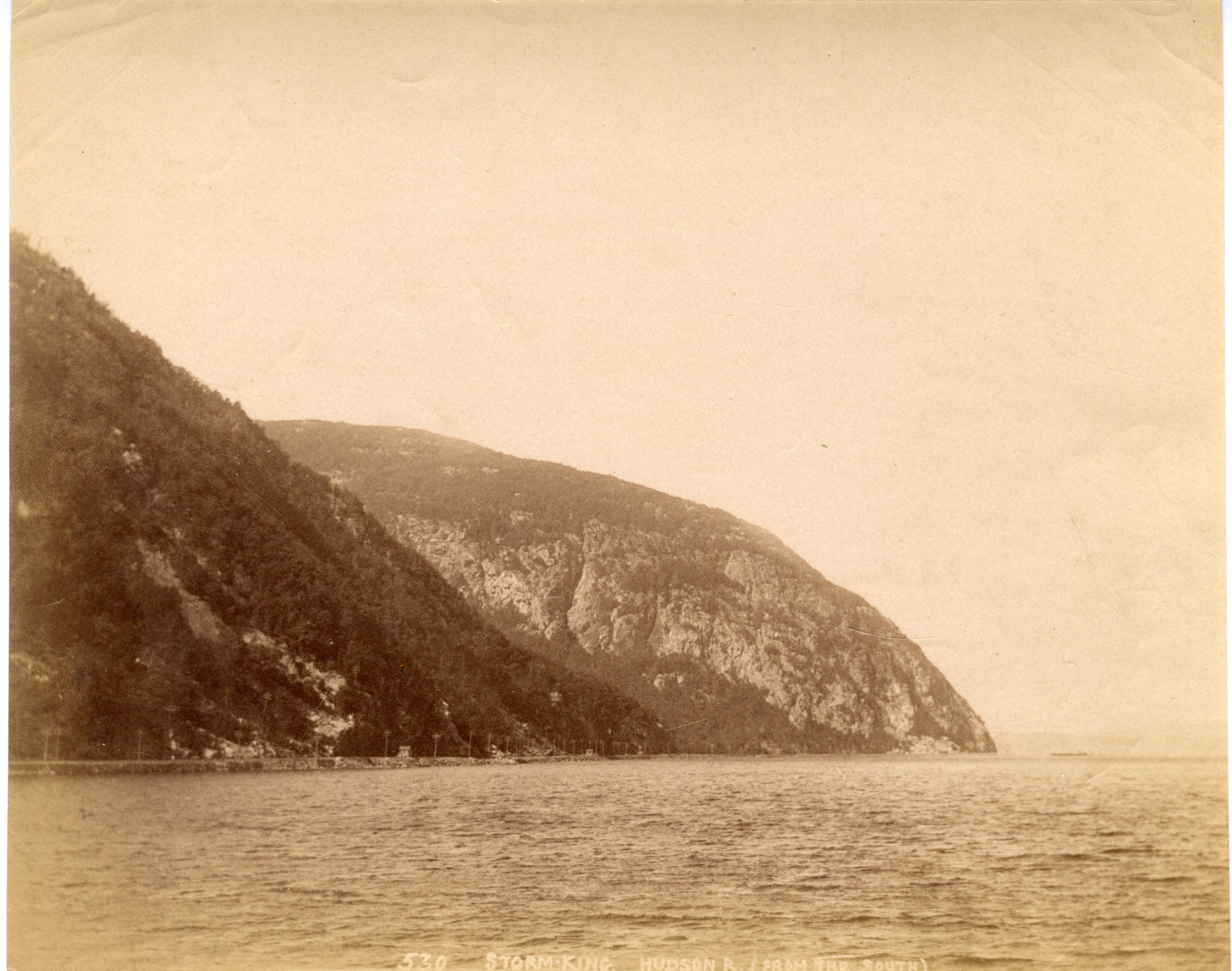
John S. Johnston. Storm King, Hudson River (from the South), undated.
Storm King Mountain rises abruptly from the west bank of the Hudson, its exposed rock face filling the frame. The mountain, which reaches over 1,300 feet, marks the northern gateway to the Hudson Highlands. Railroad tracks and telegraph poles run along the water’s edge at the base of the cliff. In the 1960s, a proposed pumped-storage power plant on Storm King became the subject of one of the landmark environmental lawsuits in American history, the case that established the legal principle that citizens have standing to challenge environmental harm.
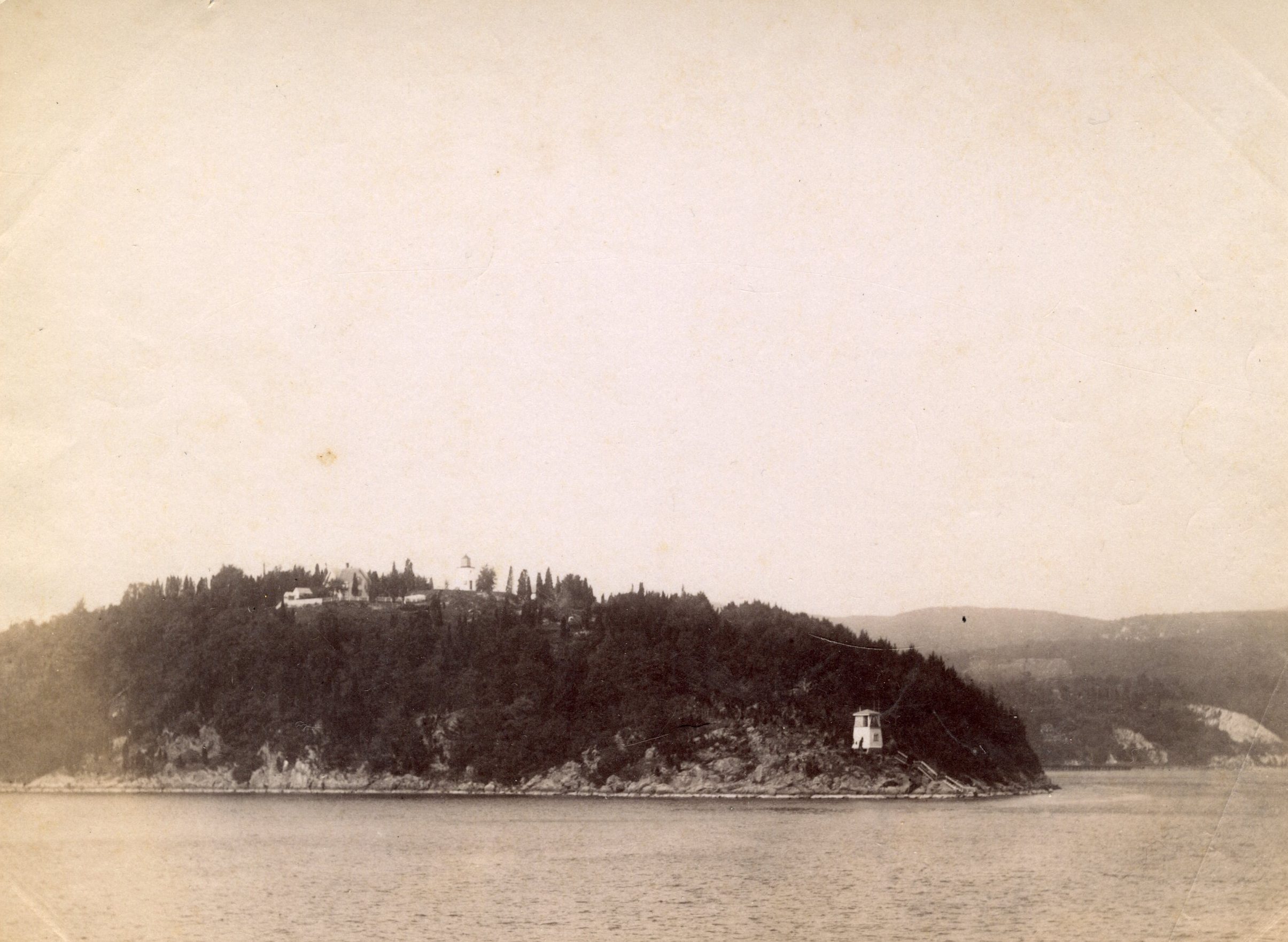
John S. Johnston. Stony Point, Hudson River, undated.
A tree-covered promontory juts into the river, a lighthouse visible at its tip. Buildings and what appears to be a house or estate are partially hidden among the trees at the summit. Stony Point was the site of a celebrated American assault on a British garrison in July 1779, when “Mad Anthony” Wayne led a bayonet charge up the bluff in darkness. The battlefield became one of the first state-operated historic sites in the country.
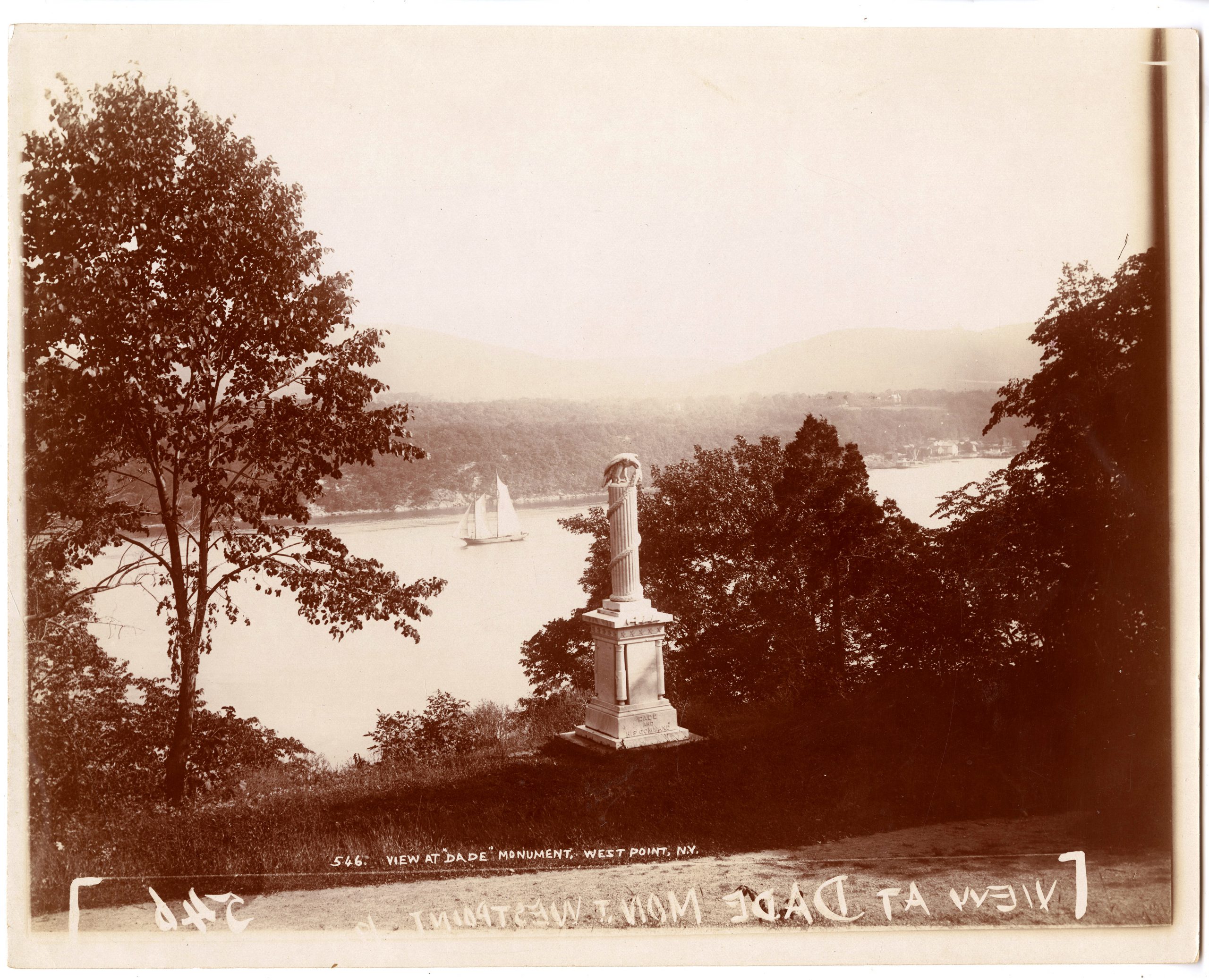
John S. Johnston. View at “Dade” Monument, West Point, N.Y., undated.
A monument on a grassy bluff overlooking the Hudson, with sailboats on the water below and the hills of the opposite bank receding into haze. The Dade Monument at West Point commemorates Major Francis Dade and his command, killed in Florida in 1835, an event that precipitated the Second Seminole War. The monument, a broken column on a pedestal, was erected in 1845. Johnston frames it against the river view, the memorial dwarfed by the landscape it overlooks.
A full description and inventory are available on request.
$5,000