


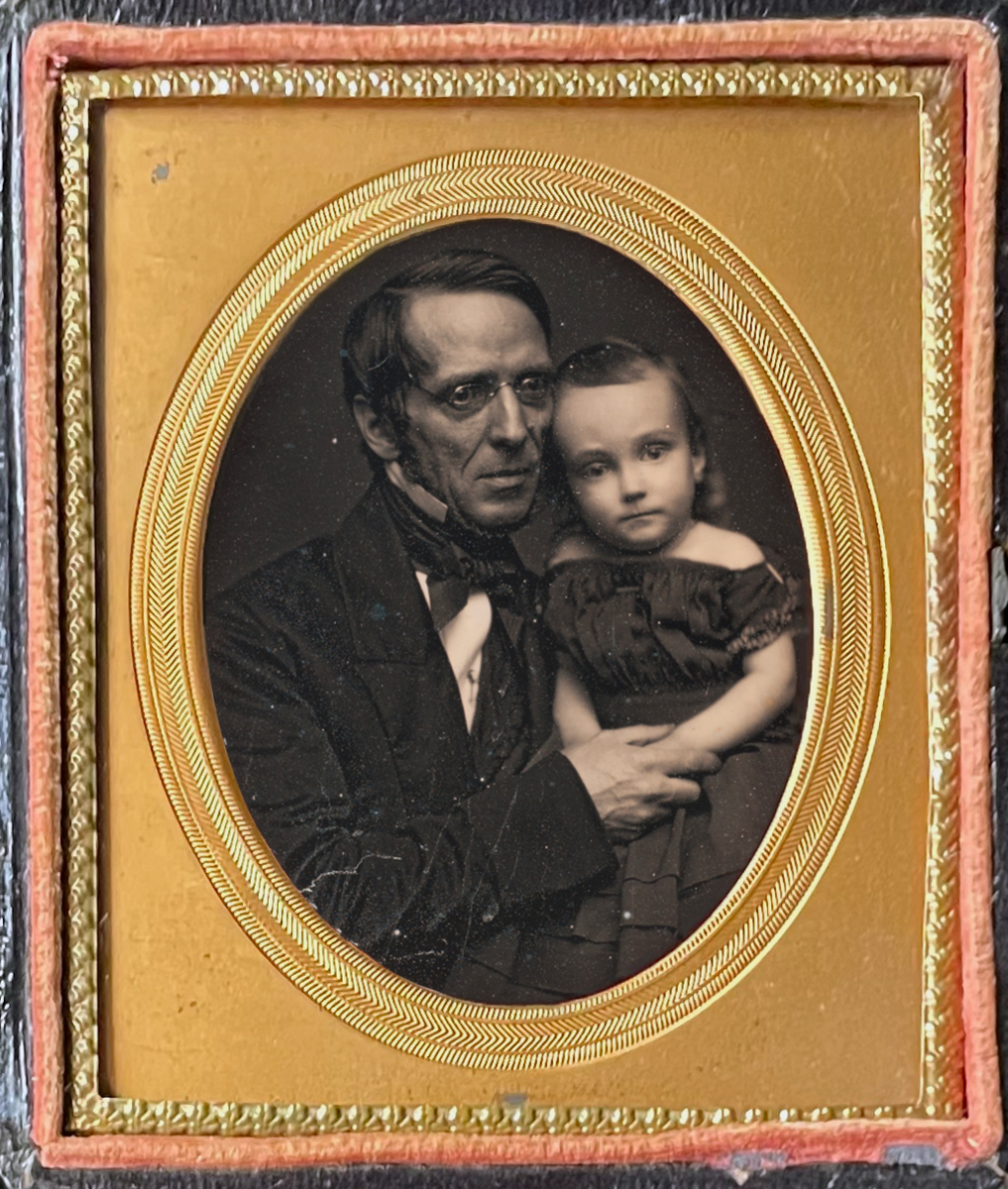
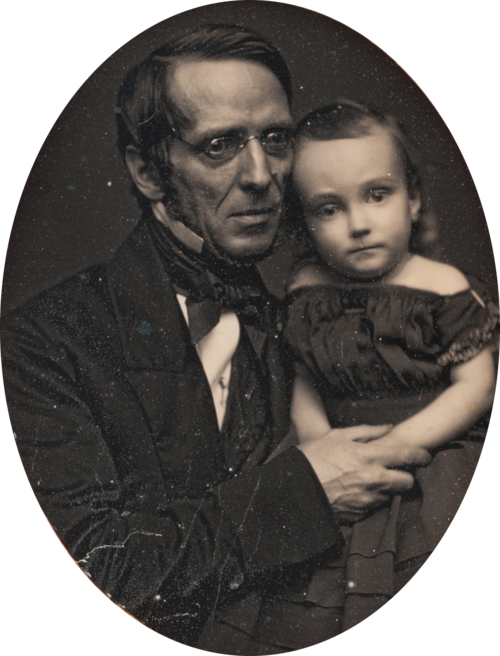
Peter Cooper, New York inventor, industrialist, and philanthropist
(COOPER, PETER.) Mathew Brady, attr. Peter Cooper, sixth-plate daguerreotype
[New York], c. 1850
Daguerreotype, sixth plate (2¾ × 3¼ in.), housed in original Brady push-button case, which may indicate that the image was made by Mathew Brady; however, the daguerreotype and mat lack a studio mark. Few spots on mat; some light wear to case’s exterior.
A stunning sixth-plate daguerreotype of celebrated New Yorker Peter Cooper, founder of Cooper Union, holding a young child believed to be one of his granddaughters.
Peter Cooper (1791-1883) was a leading American inventor, industrialist, and philanthropist. He is credited with the design and construction of the first steam locomotive in the U.S. (the Tom Thumb) and patented (#4084) the first powdered gelatin product, later known as Jell-O. He was involved in the laying of the first transatlantic cable.
Cooper viewed wealth as a trust to be used “for the education and uplifting of the common people.” In 1857 he founded New York City’s Cooper Union for the Advancement of Science and Art—an innovative institution offering free vocational courses to adults. An abolitionist, Cooper supported the Union cause during the Civil War. After the war he promoted Indian reform issues, and he sponsored several delegations of Indians to Washington, D.C., to attempt to eliminate warfare in the Western territories.
Cooper was encouraged to run for President in 1876 as the delegate of the Greenback Party, with no expectation of winning. He did, however, become, at 85, the oldest nominee of any political party. Cooper died in 1883 at the age of 92.
$12,000