


Transportation
Various artists. Collection of 5 photographs of New York City transportation
New York, 1870s-1890s
5 albumen prints, various sizes (3 ½ x 3 ½ in. – 9 ½ x 17 in. ). Very good condition over all.
This collection of five late nineteenth-century photographs shows the railroads, ferries, terminals, and waterfront infrastructure that connected New York before the advent of the subway.
New York in the 1890s cohered through an interlocking system of ferries, railroads, elevated lines, horse-drawn streetcars, and steamships, a regime still un-submerged and visible at street level. The subway remained prospective; the first IRT line would not open until 1904. These five photographs trace that system across scales, from a modest ticket office to the harbor’s edge, where routes converged and dispersed.
This collection includes:
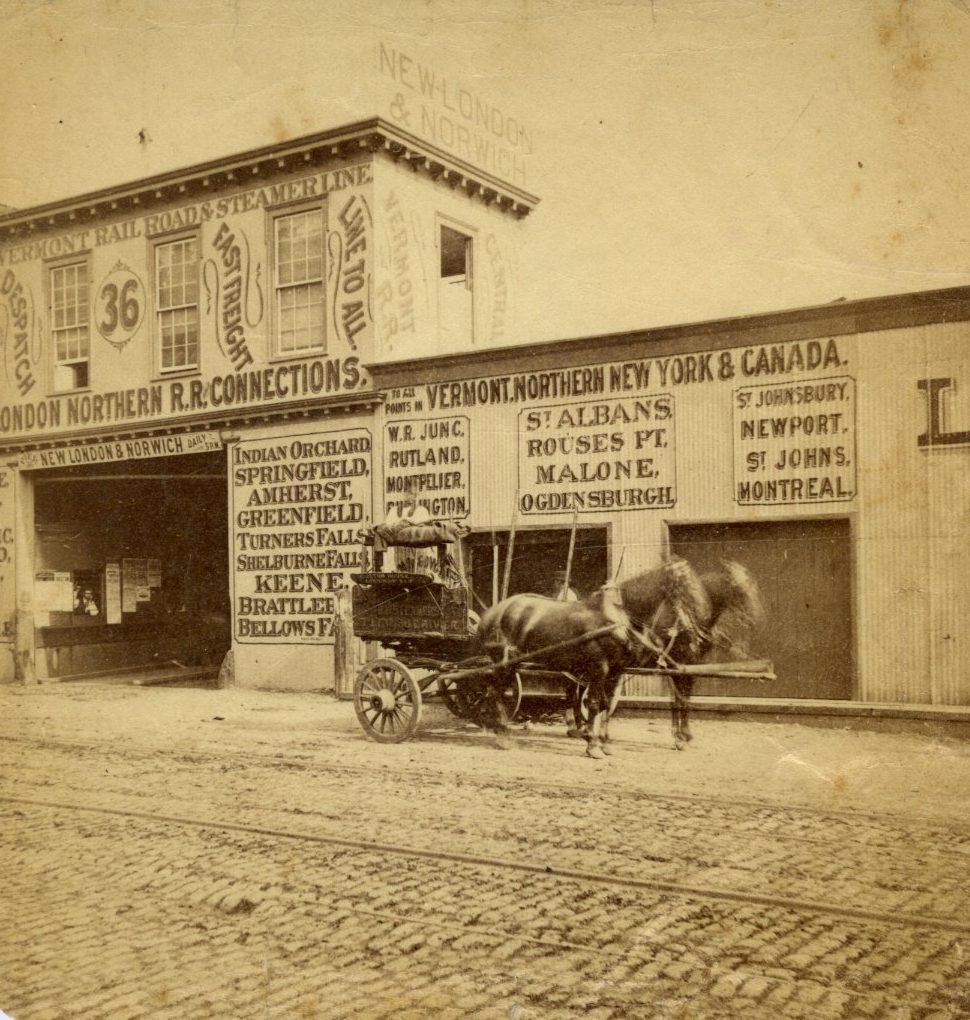
Unidentified photographer. Central Vermont Railroad and Steamer Line office, c. 1876.
The façade of this modest wooden office at number 36 enumerates destinations across Vermont and into Canada, while the sign above binds rail and steamer into a single itinerary via New London and Norwich. The horse-drawn wagon at the curb recalls the practical basis of that grand geography, as even far-reaching transport networks still depended on animal power for local transfer.
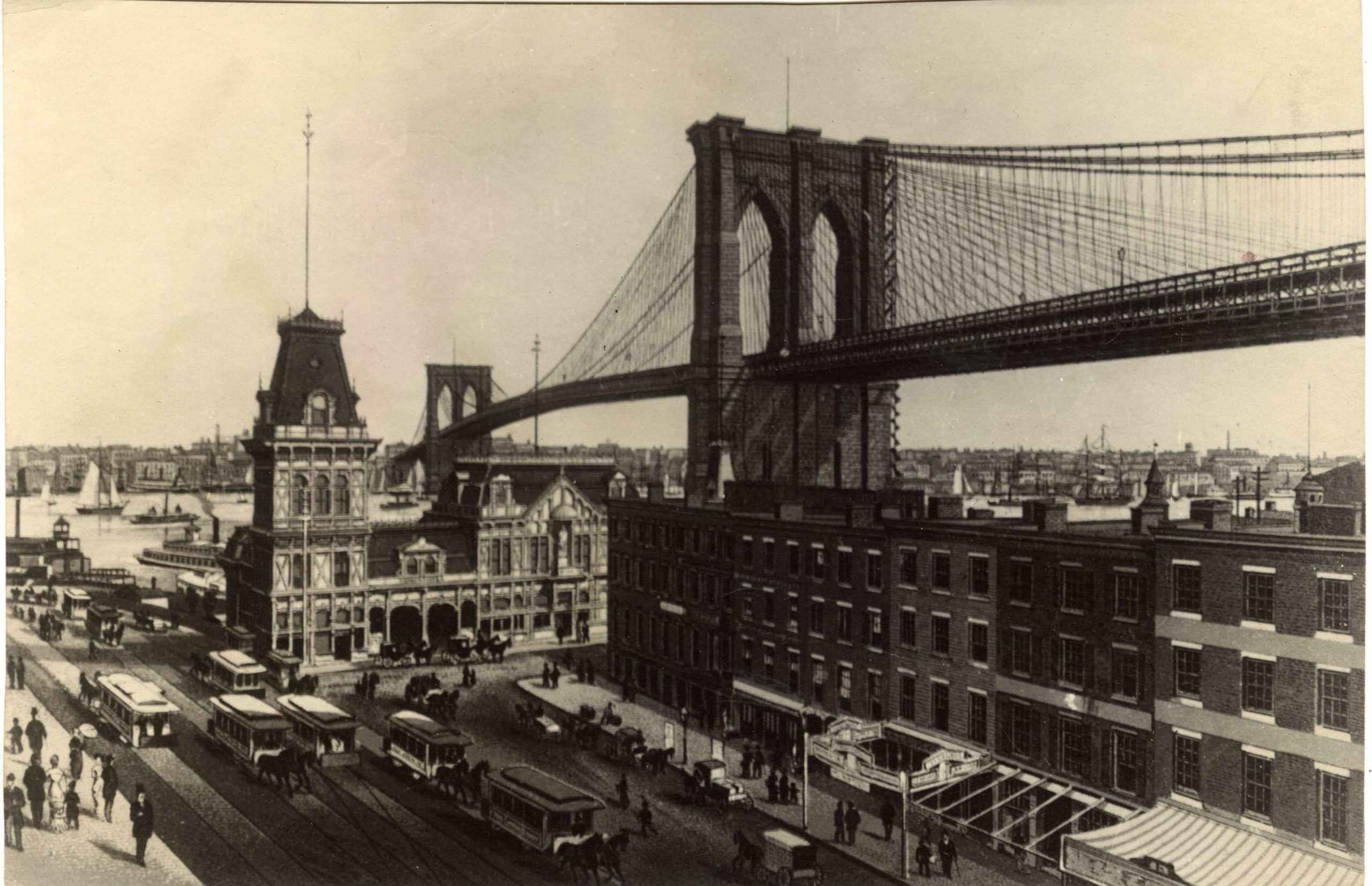
Unidentified photographer. Fulton Ferry, Brooklyn, c. 1880s-1890s.
The Brooklyn Bridge arcs overhead as the Fulton Ferry persists beneath, its terminal tower anchoring a service in operation since 1814. Streetcars queue at the approach. The photograph registers the overlap of transportation technologies rather than a pure succession, bridge and ferry occupying the same corridor while traffic distributes itself between them.
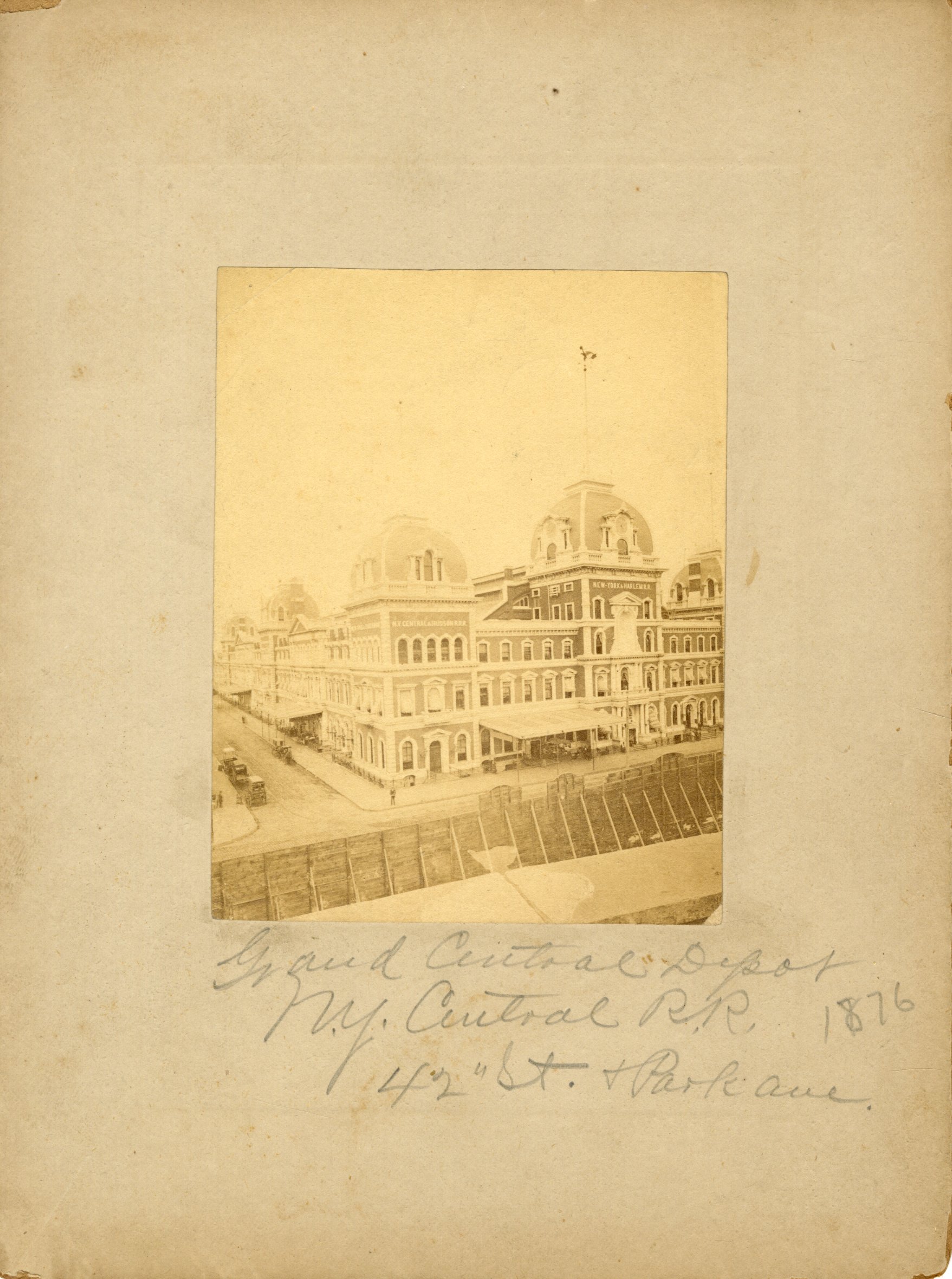
Unidentified photographer. Grand Central Depot, 42nd Street and Park Avenue, c. 1876.
The original Grand Central Depot, designed by John B. Snook and completed in 1871, seen from an elevated vantage to the southeast. Three domed pavilions crown the 42nd Street façade, each bearing the name of one of the three railroads that shared the station: the New York Central and Hudson River Railroad; the New York and Harlem Railroad; and the New York, New Haven and Hartford Railroad. The building was remodeled and expanded in the 1890s and entirely replaced by the current Grand Central Terminal (Warren & Wetmore and Reed & Stem, completed 1913).
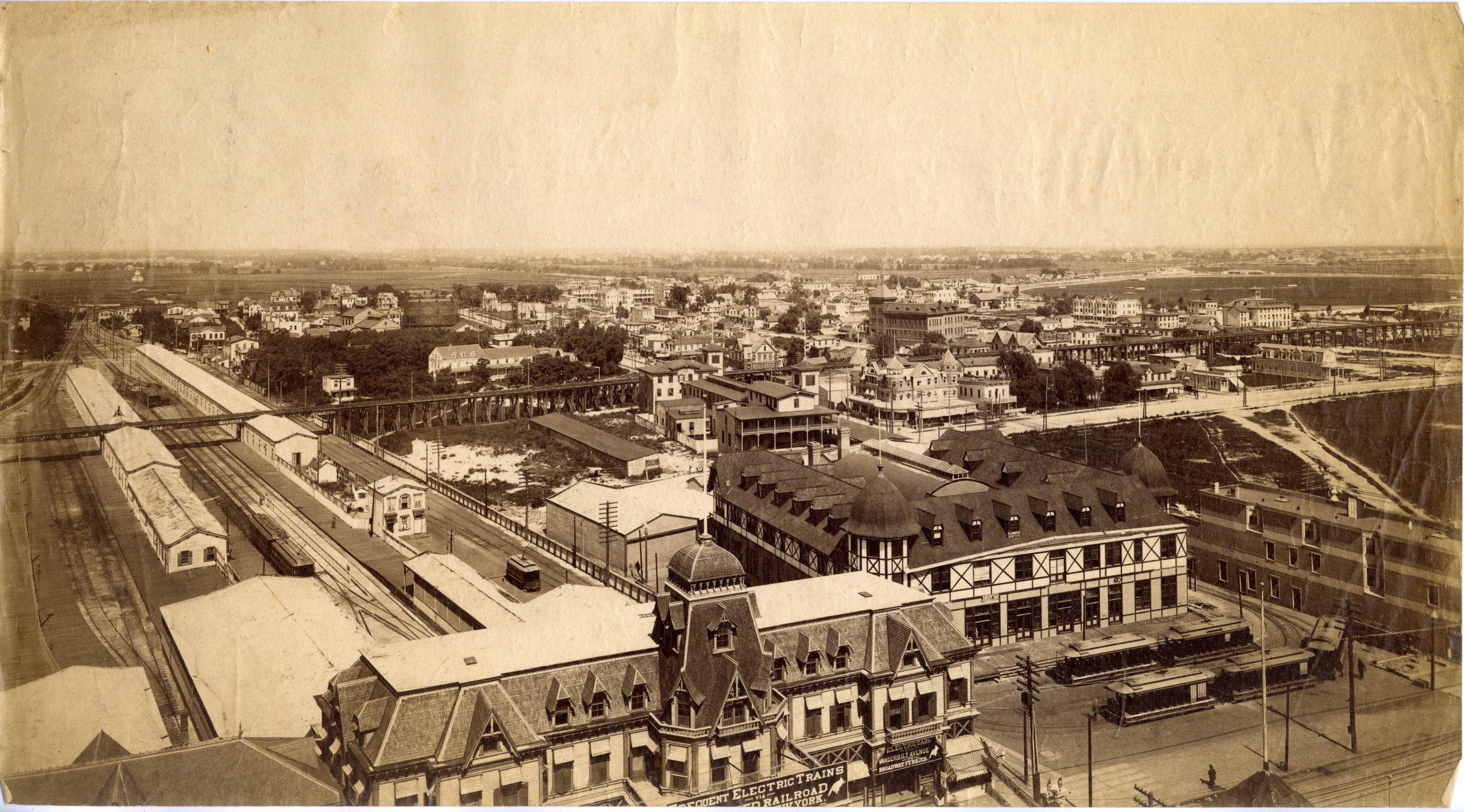
Unidentified photographer. Coney Island railroad terminus, c. 1890s.
A panoramic view over the Coney Island railroad station and surrounding neighborhood. Tracks and covered platforms run along the left side of the frame, while hotels, houses, and resort buildings spread across the flat landscape beyond. Signs for “Independent Electric Trains” and “Railroad” are visible on the station buildings in the foreground, and an elevated trestle crosses the middle distance. By the 1890s, several rail lines linked Coney Island directly to Brooklyn and Manhattan, carrying large numbers of day visitors during the summer season; excursion traffic of this kind formed the basis of the resort’s growth and made it one of the most heavily visited leisure destinations in the United States.
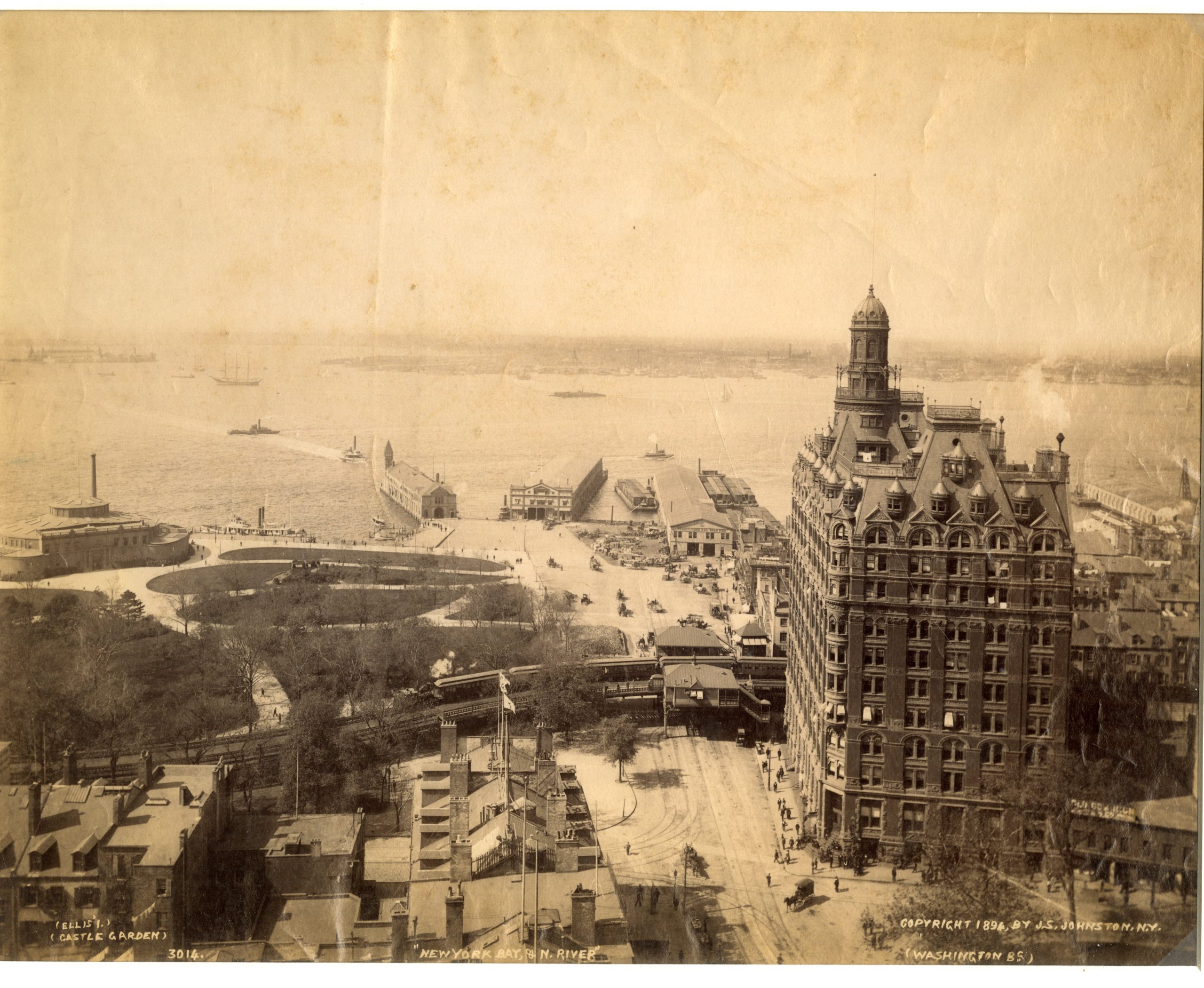
John S. Johnston. New York Bay and North River (from Washington Building), 1894.
Johnston looks south from the Washington Building at 1 Broadway over the Battery and out across New York Harbor. Castle Garden, the circular stone fort at far left, had served as the nation’s principal immigration station from 1855 until 1890, when the function moved to Ellis Island, visible in the harbor beyond. An elevated railroad curves through the middle of the frame. The tall building at right, with its turrets and ornate roofline, dominates the corner of Broadway and Battery Place. Ferries, sailing vessels, and steamships work the harbor, and the New Jersey shore is faintly visible in the haze. The photograph is essentially a diagram of the city’s southern waterfront infrastructure, all of it oriented toward the movement of people and goods in and out of the harbor.
A full description and inventory are available on request.
$6,000