



“Benjamin’s work is of the greatest importance for the history of the Jewish communities of the Middle Ages” - Cecil Roth
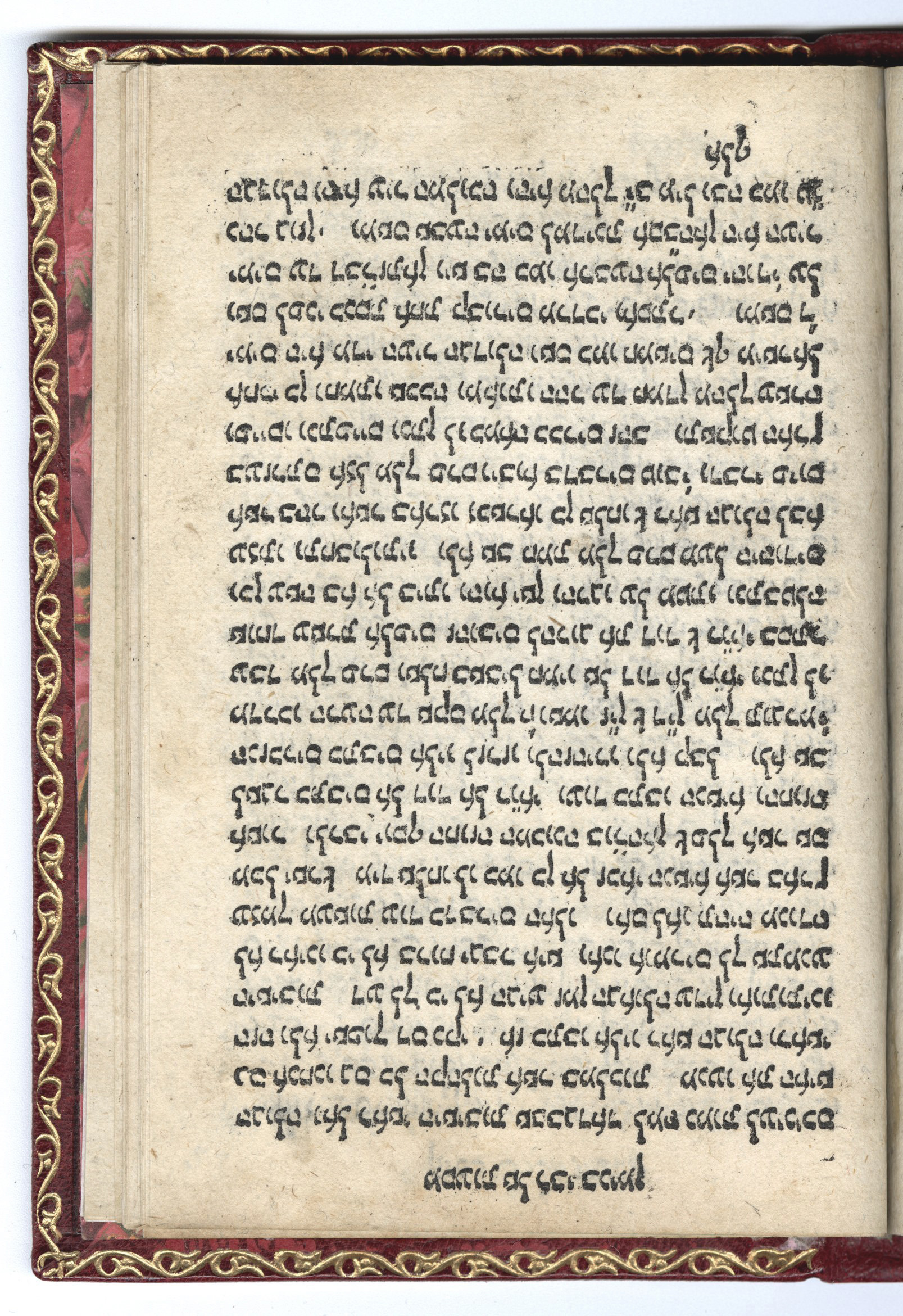
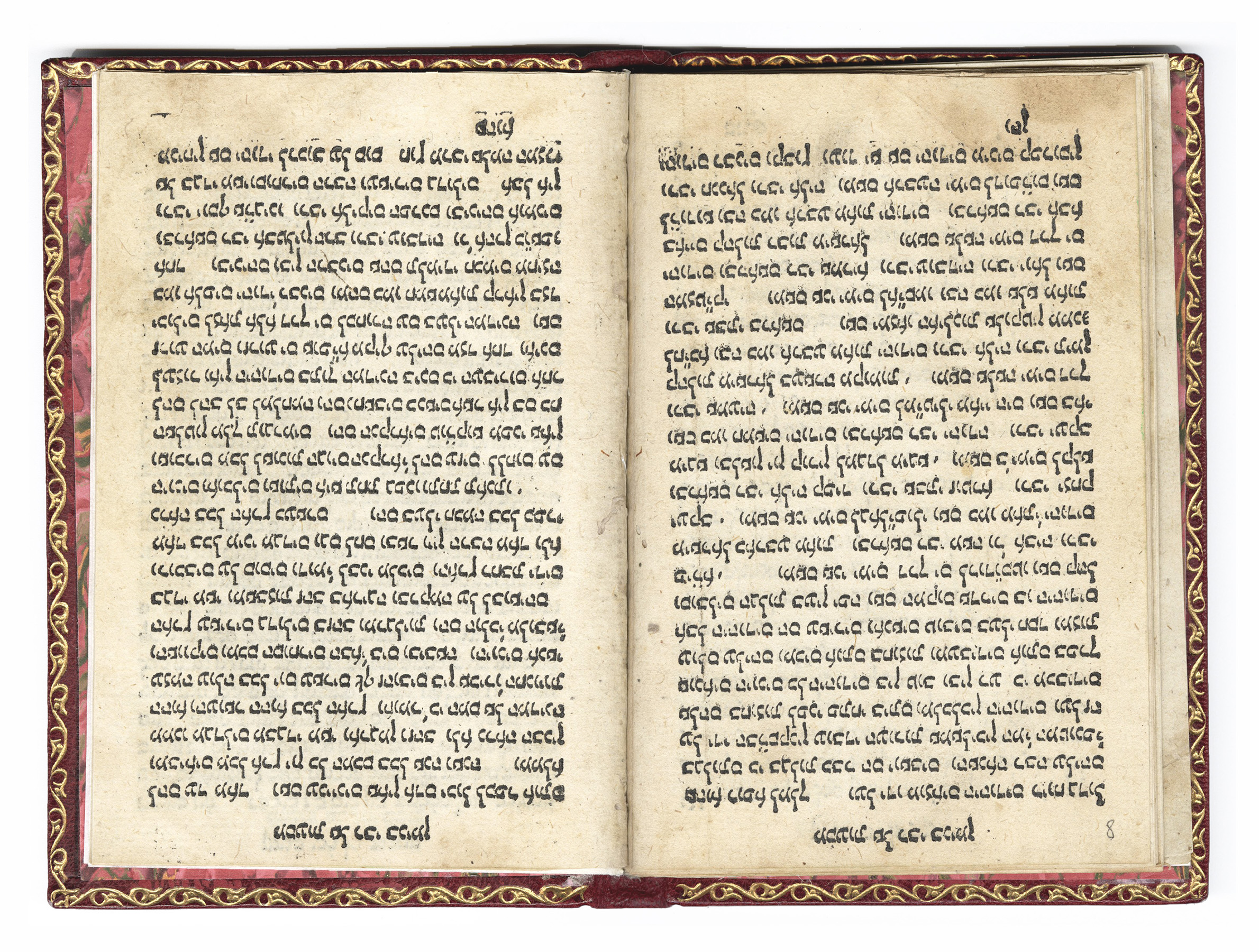
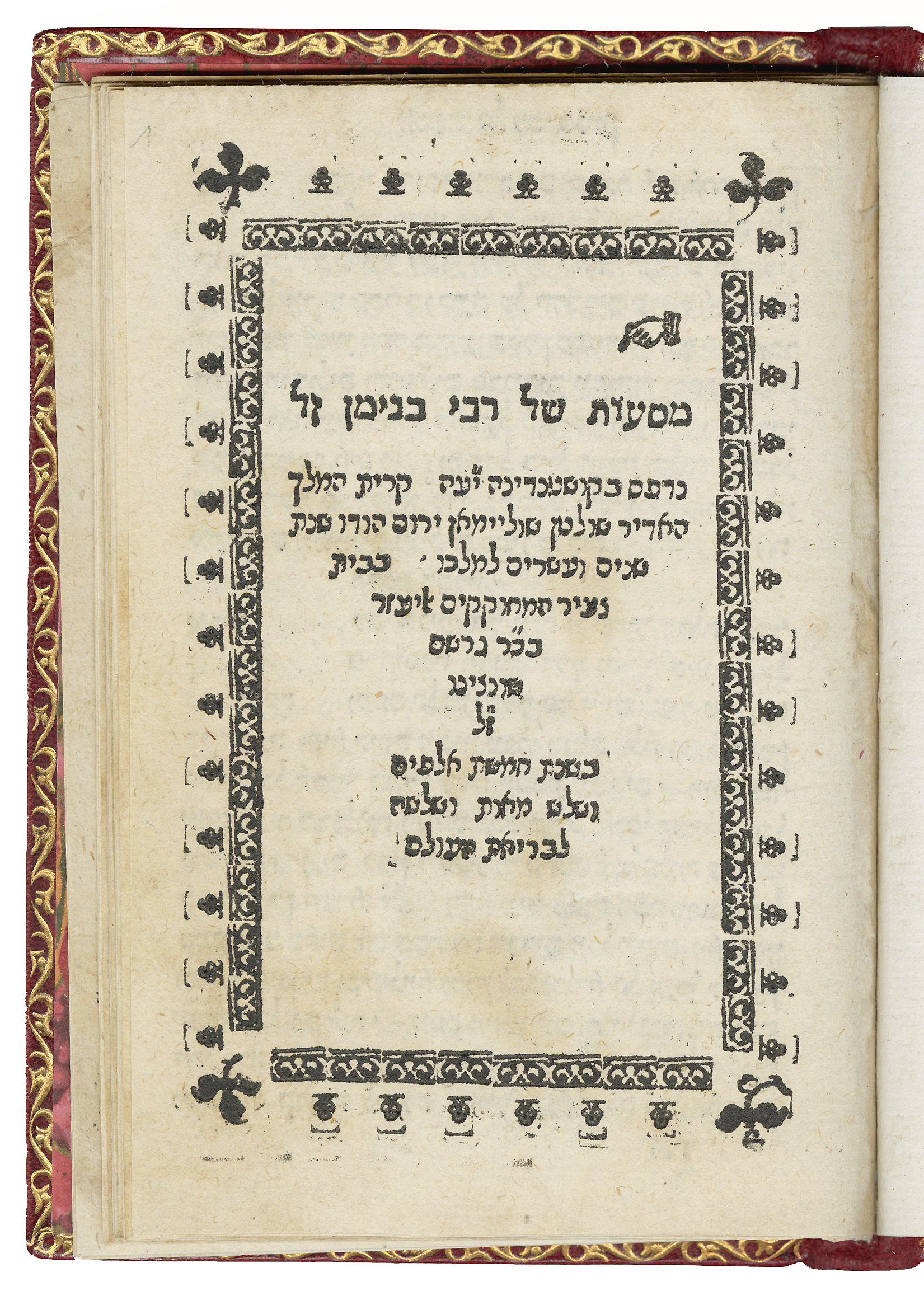
BENJAMIN OF TUDELA. Massa’ot shel Rabbi Binyamin (Travels of Rabbi Benjamin)
Constantinople: Eliezer son of Gershom Soncino, 1543
Hebrew. 16mo. [32] leaves. Red morocco gilt. Some wear and staining, marginal open tears to some leaves, slightly affecting text, worming, some restoration mainly at the end. A very rare survival.
FIRST EDITION of this Jewish classic of the Middle Ages, the most famous secular work by a Jew of the era. Rabbi Benjamin of Tudela was a 12th-century Jewish traveler and probably a merchant from Tudela in Navarre. He has been called the Jewish Marco Polo. “No other medieval traveler has left us so full and trustworthy an account of the condition of the Jews in the various countries which he visited” (Marcus Nathan Adler).
“The history of commerce must always count Benjamin’s itinerary as one of its earliest and most valued sources” (Jewish Encyclopedia). Benjamin is important for his early discussion of trade and economic conditions, especially as they pertain to Jewish communities across Europe, Asia, and Africa. He describes the lands he visited, with particular attention to the Jewish communities, their number in each location, their ways of life and their customs, and their leaders. His descriptions often mention important Jewish sages he met in various lands. “The Itinerary of Benjamin of Tudela is the most important work of its kind that has come down to us from the Middle Ages” (Neubauer).
Benjamin’s Travels is probably the most widely reprinted secular book by a medieval Jew in early modern Europe. The work became an essential source for Renaissance scholars studying the East. It was reprinted in dozens of editions in numerous languages. This first edition is very rare.
The influence of Benjamin’s Travels extends to modern times. When the Arabs rioted against Jewish assertion of rights to the Western Wall in the 1929, the official Report on the Western Wall cited the work to affirm the ancient access and worship rights of Jews: “Benjamin of Tudela says (1167) that during the later Crusader Period the Wailing Wall was a place of constant prayer. The Arabs reconquered the country at the end of the 12th century and Saladin, their great ruler, invited, in 1190, the Jews to return to Palestine. For the ensuing two centuries Palestine practically disappears from history.” Benjamin observed, “In front of this place is the Western Wall, which is one of the walls of the Holy of Holiest. This is called the Gate of Mercy, and hither come all the Jews to pray before the Wall in the open court.”
Rabbi Benjamin’s travels are breathtaking for their scope and duration. In 1165 he left Spain on what proved to be 13 years of travels in Europe, the Middle East and North Africa. Starting in Spain, France, and Italy, he continued to “Greece, the islands of the Levant, Syria, Palestine, and Mesopotamia, to Bagdad. Arrived at that city, which was then again the residence of a Jewish exilarch, he gathered information concerning countries which lay still farther east and north, and concerning the large Jewish congregations of Persia and of the countries beyond the Oxus. His homeward journey lay through Khuzistan, the Indian ocean, and Yemen, to Egypt, where he stayed a long time; thence by way of Sicily back to Spain. Some remarkable notes are given at the end of the book concerning the Jews of Germany, as also those of the Slavonic lands east of Prague,” finally returning to Spain in 1173 (Jewish Encyclopedia).
This is the great medieval book of the Jewish Diaspora. Benjamin’s work “survives as a unique record of Jewish life in the Middle Ages … Under Muslim rule, Jews thrive; under Christian rule, they languish.” Jerusalem, the hoped-for climax of his travels, proves “an embarrassing anticlimax” (Kirsch, The People and the Books: 18 Classics of Jewish Literature). The great traveler concludes, “If we were not afraid that the appointed time has not yet arrived or been reached, we would have gathered together, but we dare not do so until the time for song has arrived …”
VERY RARE. Only two copies are located in the United States: Hebrew Union College and Jewish Theological Seminary (defective). Only one other complete copy, a rebound example, has appeared for public sale in more than fifty years.
Provenance: Sotheby’s, New York, 3 December 2004, lot 89, $96,000.
Reference: Kirsch. The People and the Books: 18 Classics of Jewish Literature, ch. 6.
$185,000