
-
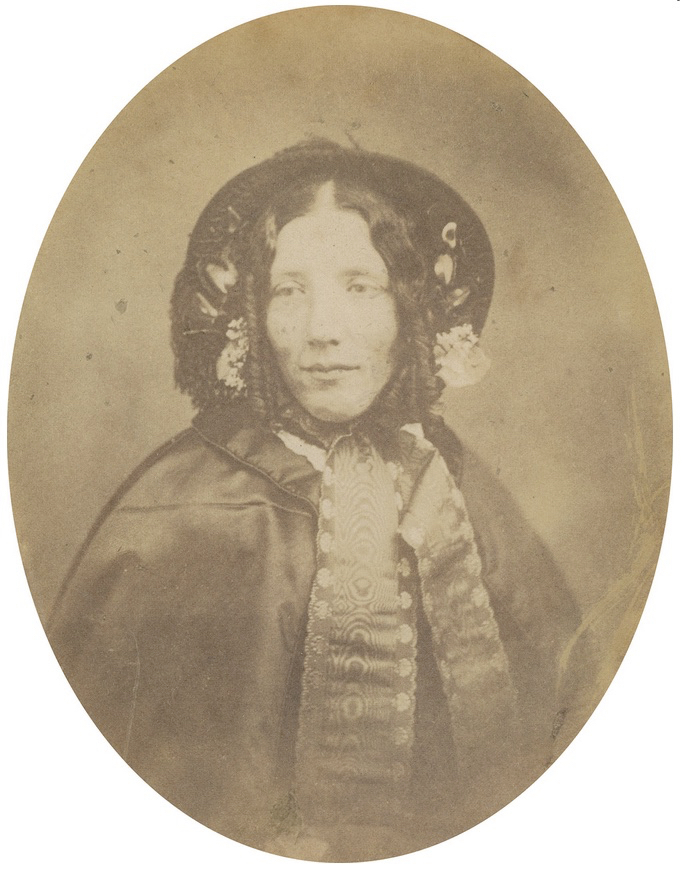 (STOWE, HARRIET BEECHER.) John A. Whipple
Harriet Beecher Stowe. Boston, 1853
This is a fine salt print portrait of Harriet Beecher Stowe by John A. Whipple, a leading early American portrait photographer.
$25,000
-
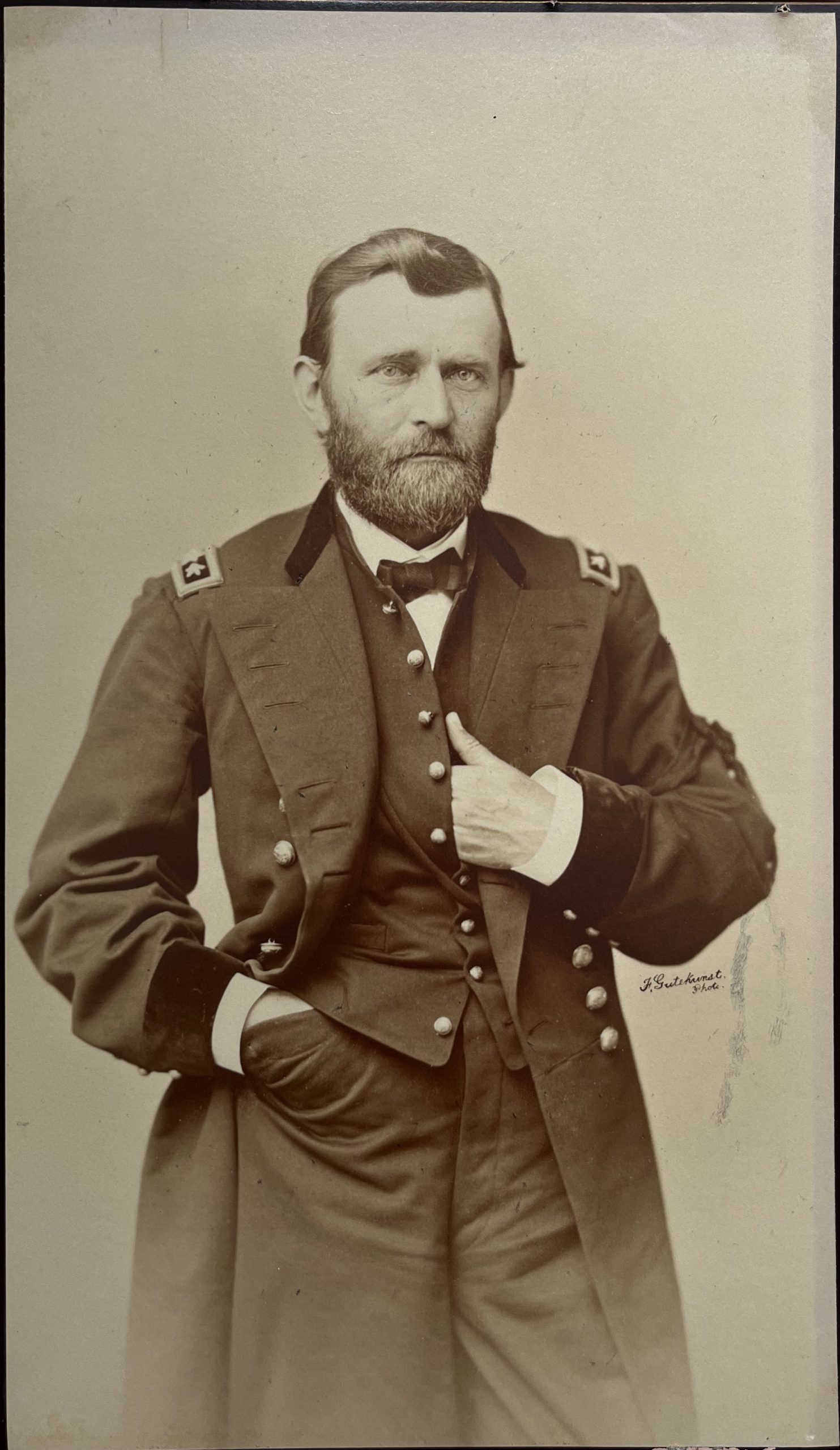 (GRANT, U. S.) Gutekunst, Frederick
Lt. Gen. Ulysses S. Grant. Philadelphia: Gutekunst, April or May 1865
This impressive full-length portrait of Grant in uniform was made at war’s end to capture the triumphal hero at the height of his powers. This portrait shows Grant emulating the pose of Napoleon in David’s famous Napoleon in his Study (1812), a pose favored in military portraits of the time.
$9,500
-
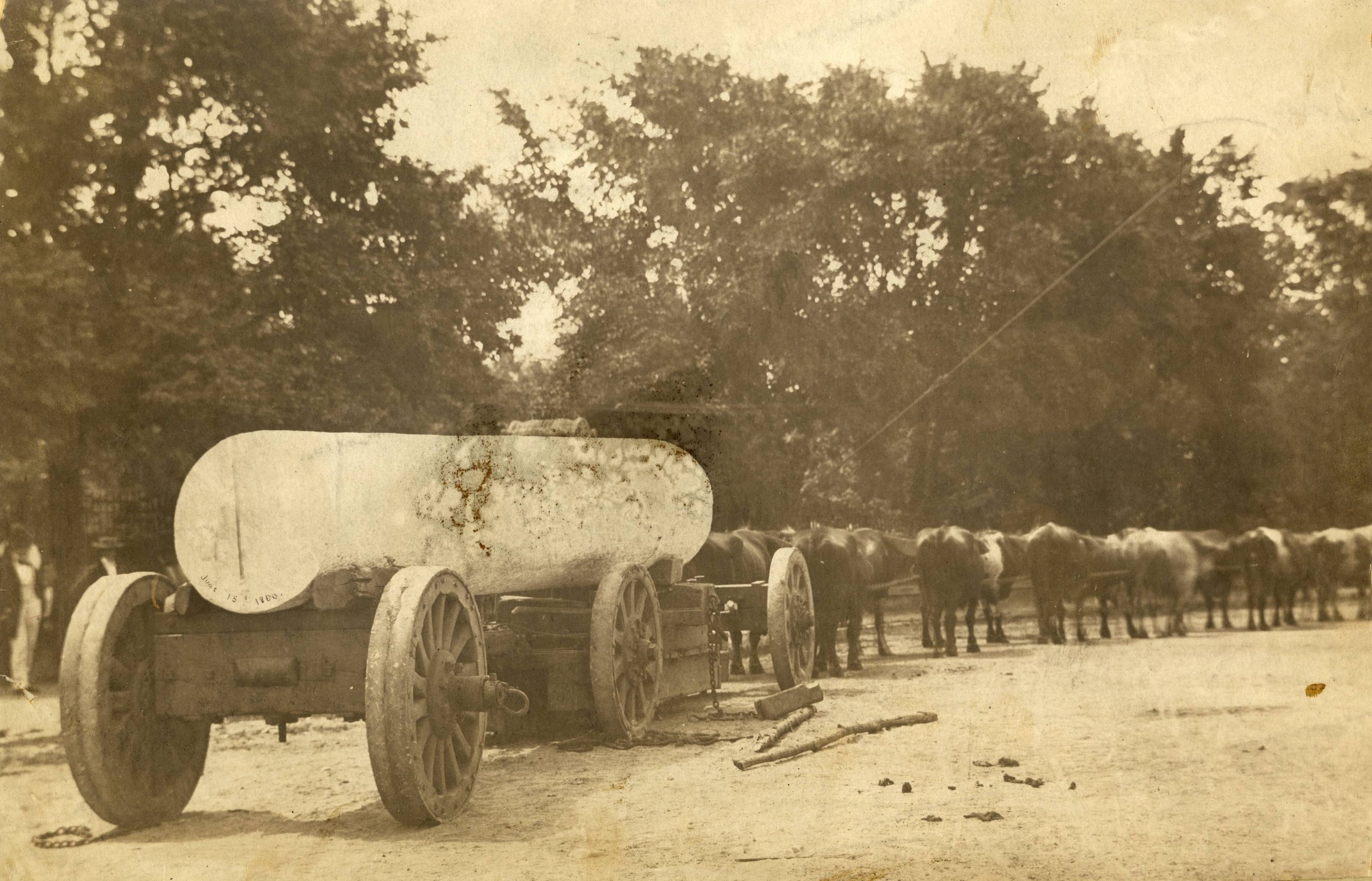 (U.S. CAPITOL.) John Wood
Marble column being carried on a cart to the Capitol. Washington, 1860
This rare salt print shows a colossal marble column being carried to the Capitol during its construction. The enormous cart is being drawn by team of twelve or more horses.
$7,500
-
 SLAVERY ,AMERICAN
Important Pair of Daguerreotypes: Black Caregiver with White Baby and the Child’s Parents. Talbot County, Maryland or Texas, c. 1853
This striking pair of daguerreotypes evokes the complex relationships between enslaved people and their enslavers in the American South, especially between white families and the trusted women who cared for their children.
the pair: $18,500
-
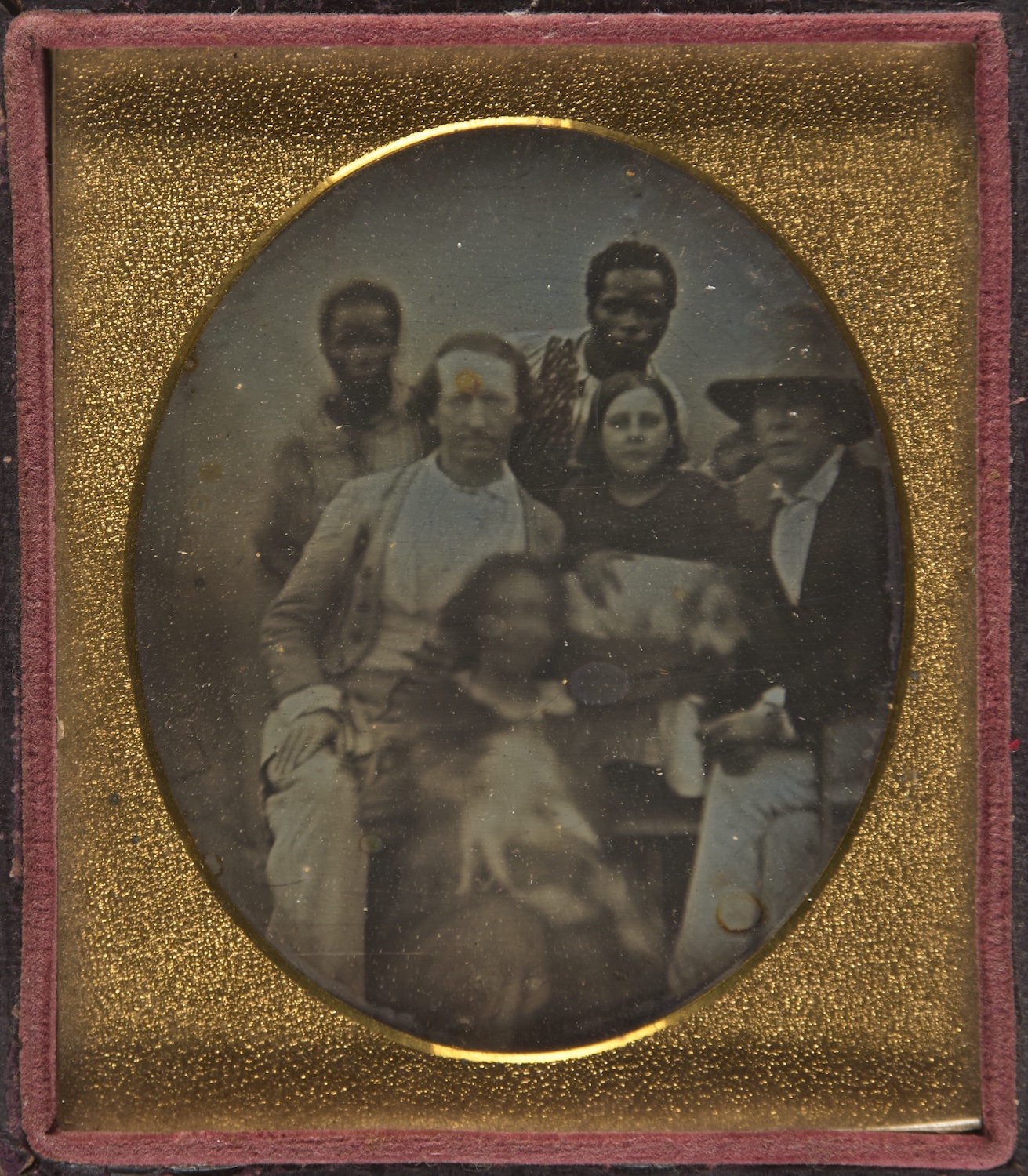 (Slavery in South Carolina.)
A collection of images associated with South Carolina physician and plantation owner Sidney Smith. South Carolina, 1845-50
A unique survival. This important collection of largely identified photographs documents the home and family of Dr. Sidney Smith and those he enslaved at Gravel Hill, his South Carolina plantation. The collection includes an extraordinary daguerreotype depicting Dr. Smith, his two daughters, and his brother, posed together with two enslaved African American men. This is one of the earliest known images—if not the very earliest photograph—of an identified plantation owner posing with enslaved African Americans.
$60,000
-
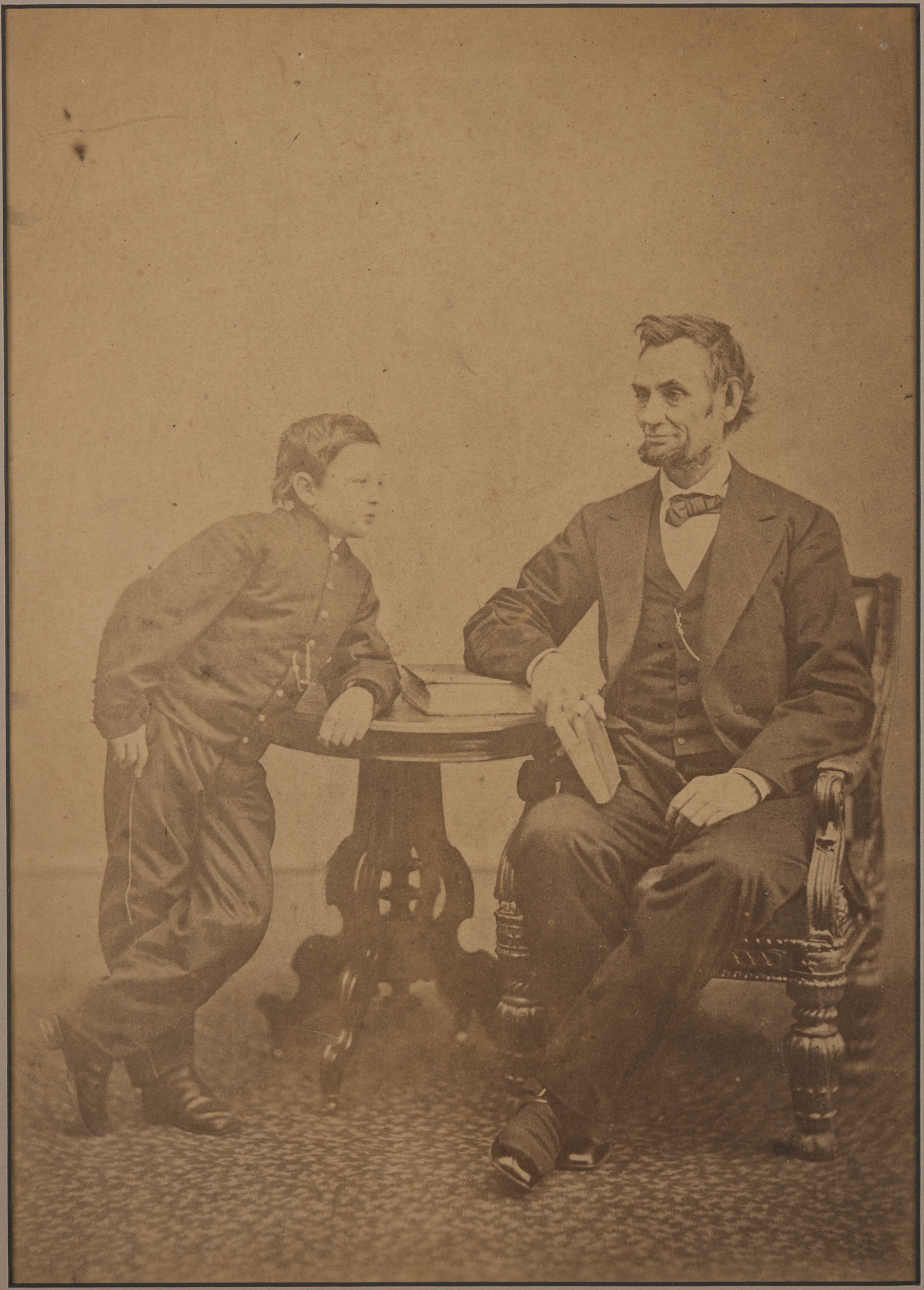 (LINCOLN, ABRAHAM.) Alexander Gardner.
Portrait of Abraham Lincoln with his son Tad. Washington, February 5, 1865
Perhaps the most delightful of the Lincoln family photographs, this portrait shows an impish Tad leaning on a table as his seemingly bemused father sits on Gardner’s studio chair. Thomas “Tad” Lincoln was the youngest of the Lincoln boys.
$65,000
-
 (GARDNER, ALEXANDER.) Gardner, O'Sullivan, Barnard, and others
A fine collection of 7 classic Civil War photographs from Gardner’s Sketch Book. Washington: Gardner, [1865-66]
A splendid collection of Gardner prints.
$27,000
-
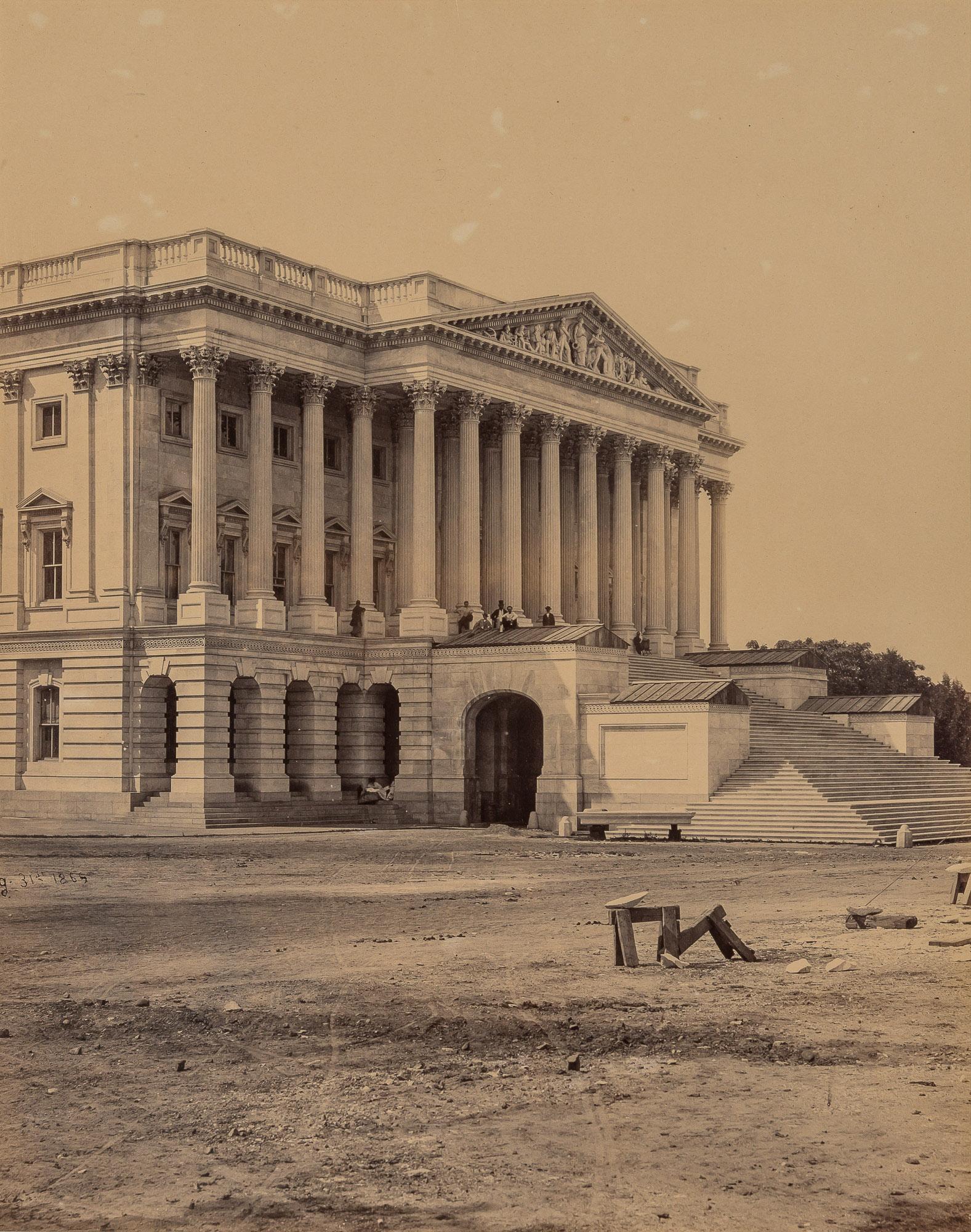 (U.S. CAPITOL.) Photographer unidentified
East Front of the Capitol. Washington, August 31, 1864
This rare photograph shows the East Front of the U.S. Capitol during construction. Sawhorses and construction debris are visible in the foreground, while a number of figures, perhaps builders and the architect, stand at the head of the main stairs beneath Thomas Crawford’s pediment of The Progress of Civilization.
$5,500
-
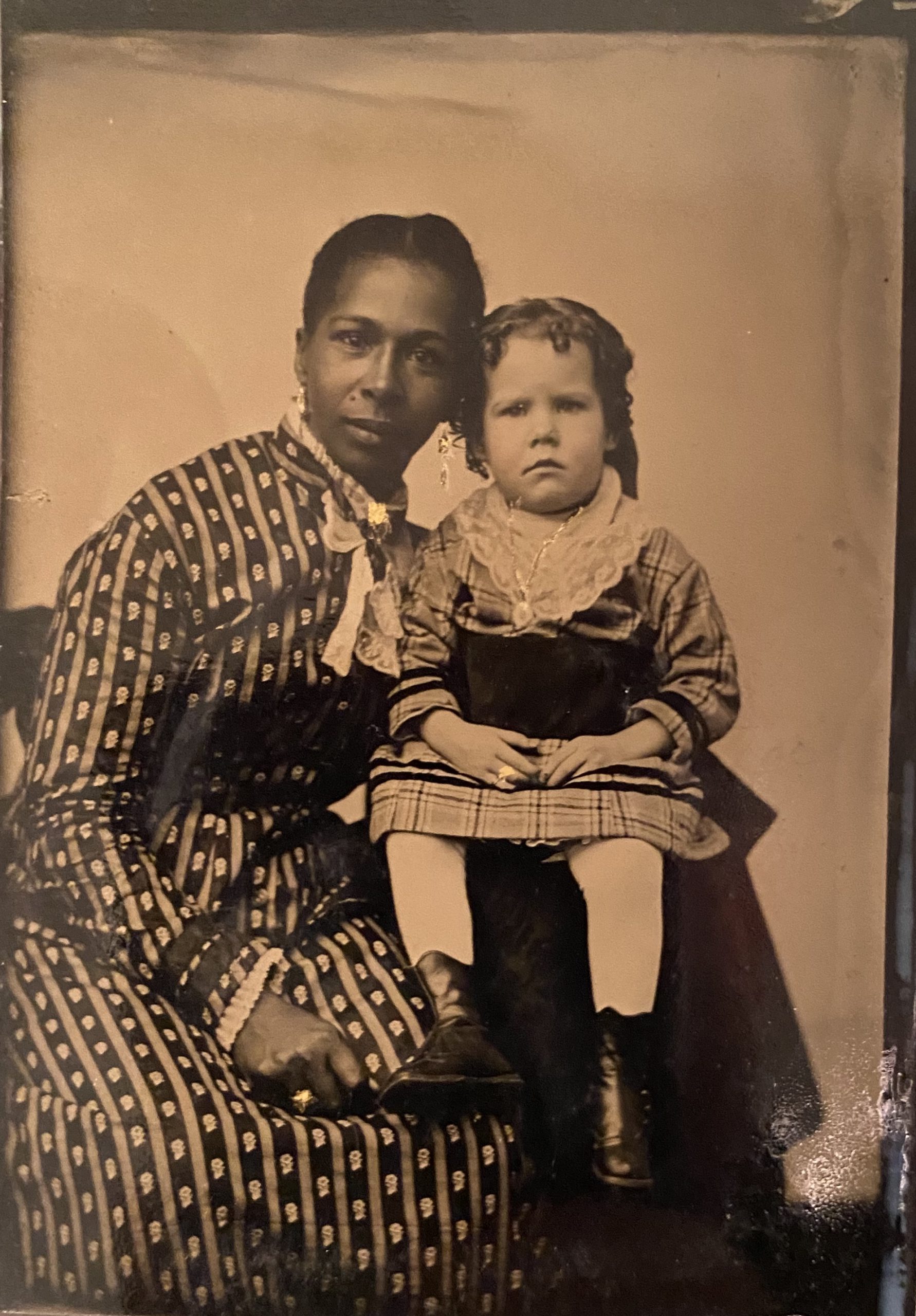 (AFRICAN AMERICAN.)
Black woman with white child. No place, c. 1870-90
This delightful photograph shows a kind-looking young black woman sitting with a somewhat sour-looking young white child. Both are finely dressed for the occasion, the woman in an elegant dress with lace collar and the child in a dress with an elaborate lace collar. The photographer has highlighted in gold the fine jewelry each wears
$4,500
-
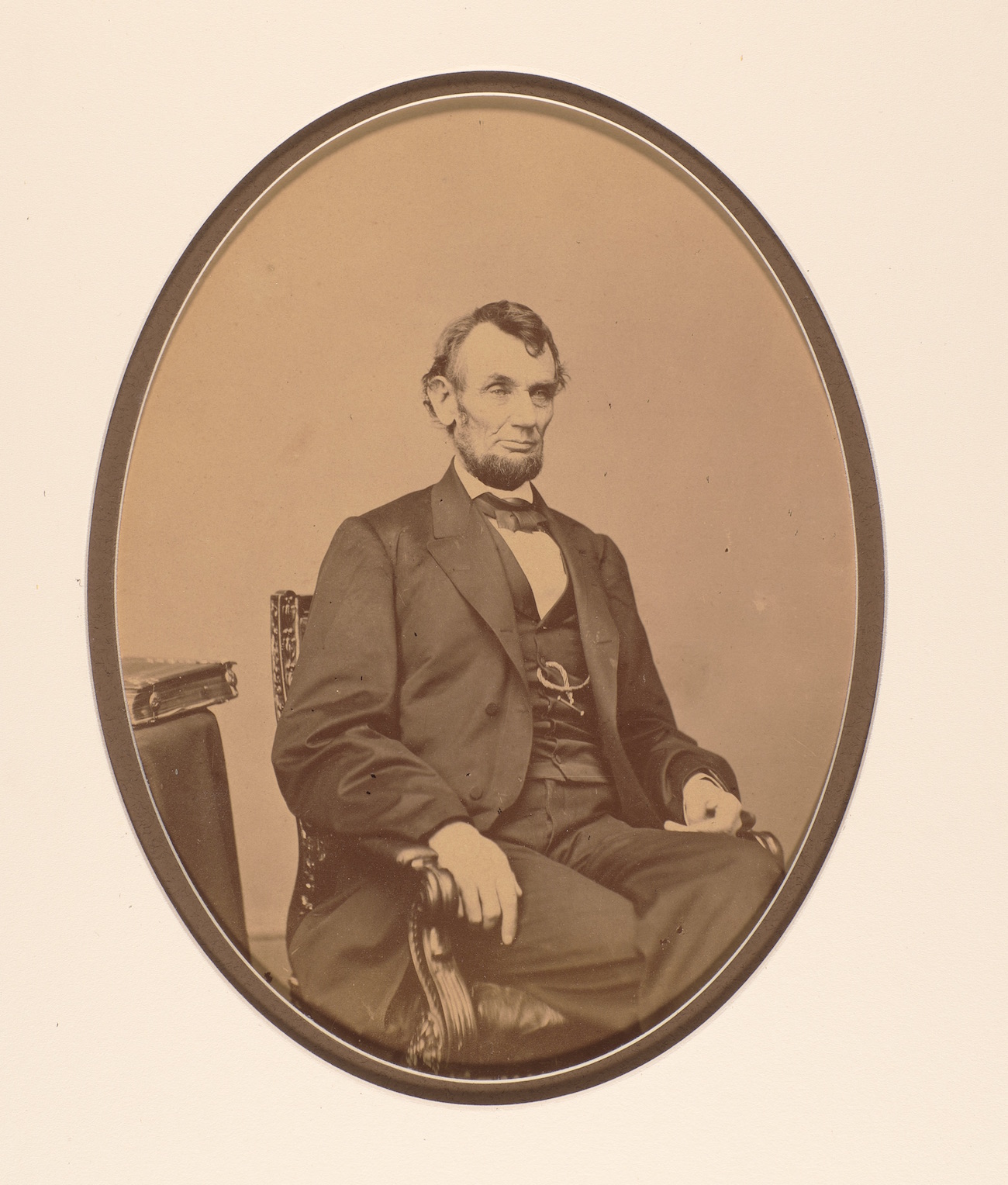 (LINCOLN, ABRAHAM.) BRADY STUDIO. Anthony Berger
Abraham Lincoln, seated portrait.. Washington: Mathew Brady Gallery, 9 February 1864
The classic Brady $5 bill photograph. This celebrated portrait, the basis for the five-dollar bill engraving used for most of the 20th century, is one of seven poses taken by Anthony Berger at Mathew Brady’s Washington, D. C. studio on February 9, 1864. The most prolific photographer of Lincoln, Brady himself did not actually operate his cameras during the war years, instead training and employing men like Alexander Gardner and his successor Anthony Berger, who took this picture, to operate the camera.
$15,000

